What's the actual point of drawing your invention?
A drawing forces you to answer questions your head skips over. What connects to what. What moves. What's inside versus outside. Most first-time inventors discover gaps in their own idea the moment they try to put it on paper.
The drawing does not need to be beautiful. It needs to be clear enough that a stranger could understand what the parts are and how they relate. That's the whole bar at this stage.
This matters before you spend money on a prototype, before you brief a designer, and before you talk to anyone about prior art (the existing patents, products, and public disclosures that came before your idea, more on that below). A rough drawing is often the cheapest validation tool you have.
Do you need to be good at drawing to do this?
No. Stick figures, boxes, arrows, and labels are enough for the earliest stage. Patent examiners, manufacturers, and advisors are used to reading rough sketches. What they cannot work with is a description with no visual at all, because too much gets lost in words alone.
If you can draw a rectangle and write a label next to it, you can do this. The skill that matters here is not artistic talent, it's the discipline of showing every part you can name.
What should a first invention sketch actually include?
Start with three separate views, even if they're crude:
- An overall view showing the whole invention as a person would see or use it.
- An exploded or labeled view showing the individual parts and how they connect.
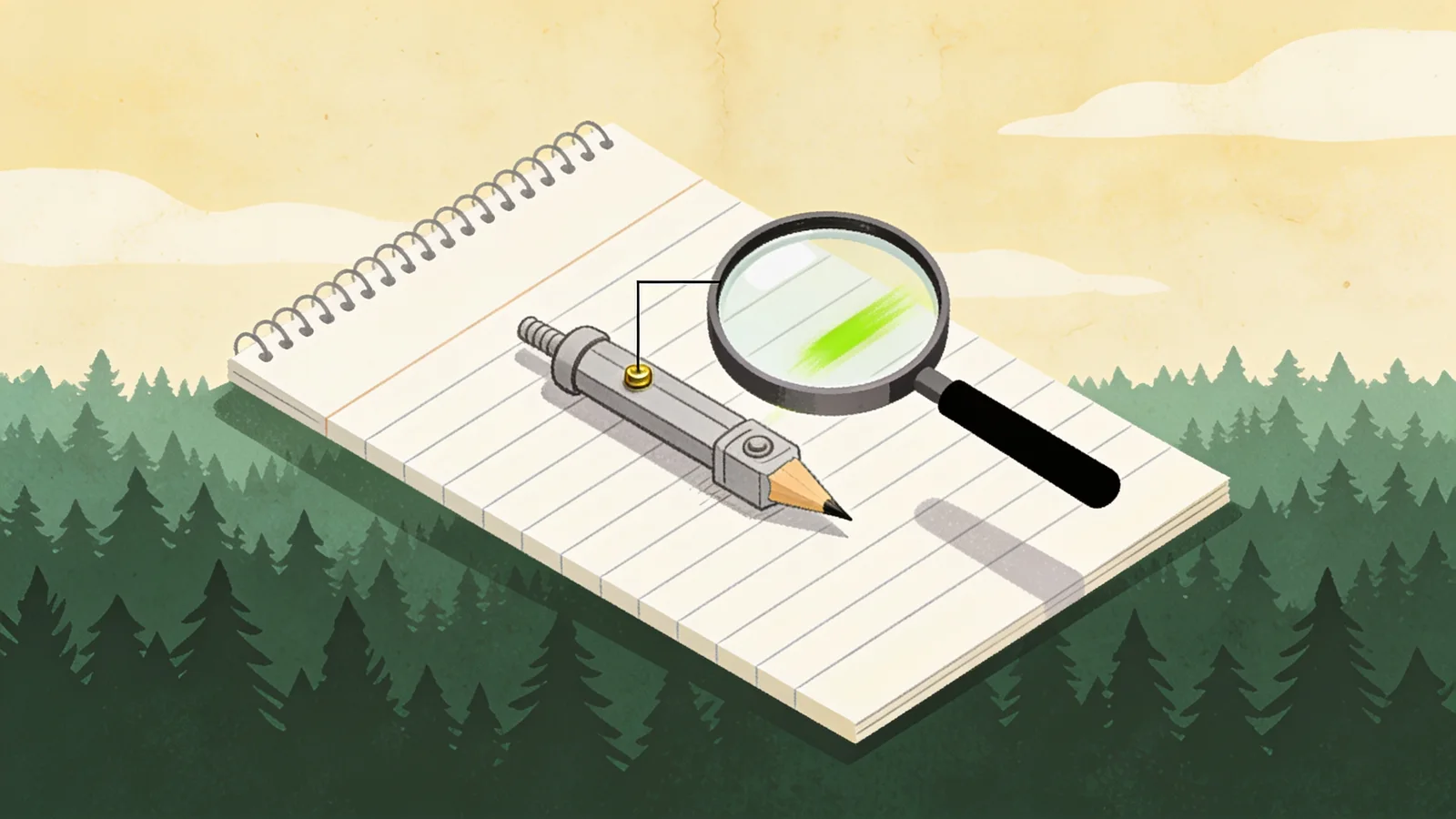
- A view of the part that's actually new. Most inventions aren't 100% original, one piece or one mechanism is the real innovation. Draw that piece larger and separately.
Label every part with a plain word, not a number code yet. "Hinge," "filter," "button," "sensor." Write a one-line note next to anything that moves, heats, connects wirelessly, or changes state. That single habit catches most of the ambiguity that trips up later documentation.
Should you show how it's used, not just what it looks like?
Yes, if you can. A second small sketch showing a hand, a body, or an environment interacting with the invention often communicates more than the object alone. It answers the question "who uses this and how" before anyone has to ask it.
What tools should you actually use to draw it?
Paper and pencil is genuinely fine for the first pass. After that, a few low-friction options:
- A tablet sketching app (even a basic one) if you want to erase and redraw quickly.
- Free vector tools like Inkscape if you want cleaner lines without paying for software.
- A phone camera pointed at a physical mockup, cardboard, clay, whatever, if drawing genuinely isn't working for you. A photo with labels added is still a drawing in every sense that matters here.
What you should avoid at this stage is spending money on a professional patent illustrator. That's a later-stage expense, and it's worth reading whether you actually need a formal invention drawing before you file a patent before you commit to it.
How detailed does the drawing need to be before you show anyone?
Detailed enough that someone with no context can point to a part and ask a specific question about it, rather than asking "wait, what is this." That's the practical test.
You don't need dimensions, materials, or exact angles yet. You need:
- Every functional part named.
- Every connection between parts shown, even as a simple line.
- The one part that's actually new, called out clearly.
If a friend, a manufacturer, or an advisor looks at the sketch and immediately understands what problem the invention solves, it's done its job for this stage.
Can a rough sketch help before a prior art search?
Yes, and this is where a lot of inventors skip a step. Before anyone can look for prior art, meaning the patents, products, and publications that already exist and might overlap with your idea, someone (a person or a tool) has to know exactly what your invention is. A vague verbal description leads to a vague search. A labeled drawing gives a much sharper target.
This doesn't mean your sketch determines whether something is or is not patentable, that's a legal conclusion no drawing alone can produce. But a clear drawing helps surface the right comparison points, which is exactly the kind of question a patent attorney, or an IP-focused advisory process, would want answered early rather than late.
If you want to see how that comparison process actually works, EntreDash's methodology page explains which databases get searched and how findings get cited back to your idea.
What should you do with the drawing once it's done?
Three honest next steps, roughly in order:
- Use it to talk to yourself first. Does the drawing reveal a part you hadn't thought through? Good, that's the sketch working.
- Use it to brief anyone helping you. A designer, a prototyper, or later a patent drafter will move faster and make fewer wrong assumptions with a labeled sketch in hand than with a paragraph of description. If you're getting ready for that conversation, this guide on briefing a patent drafter walks through what that handoff should actually contain.
- Use it as a dated record. Write the date on it, keep a copy. It's not legal proof of anything by itself, but it's a small habit that costs nothing and can matter later.
How does this sketch fit into validating the idea overall?
Drawing the invention is one piece of a bigger sequence: understand what you've actually built, check who else has built something like it, size up whether people would use or buy it, and get a sense of what it would cost to bring to life. A sketch feeds directly into the first two. If you want to see where sketching fits among all the other steps, the invention development guide lays out the full path from idea to attorney-ready.
If you're at the very start of that sequence and want a structured way to work through it, a strategy session with a Product Strategist, an IP Consultant, and a Financial Analyst, the three advisors EntreDash puts an idea in front of, can take your rough sketch and description and turn it into a clearer picture of where the idea stands: is the problem real, does something like it already exist, and what would it take financially to move forward. You can see the full flow on the how it works page.
What's a common mistake people make when drawing their invention?
The biggest one: drawing only the finished, polished version and skipping the parts that don't work yet. A sketch that hides the unresolved pieces hides exactly the information an advisor, a drafter, or a manufacturer needs most. Draw the messy version. Label the part you're unsure about with a question mark instead of leaving it out. That question mark is often more useful than a clean line.
The second common mistake is treating the sketch as a one-time task. Ideas change as you learn more, and the drawing should change with them. If you want a lightweight way to keep the idea and its documentation current as it evolves, it's worth reading about how to track the patentability of a new idea over time, since a drawing is one of the easiest things to let go stale.
Is a hand-drawn sketch ever enough on its own?
For the earliest stage, yes. It's enough to think clearly, to talk to advisors, and to start a prior art conversation. It is not, on its own, a substitute for formal patent drawings later in the filing process, and it is not legal documentation of an invention date. Those are different tools for different jobs, and confusing the two is where inventors get themselves into trouble. Keep the sketch honest, keep it dated, and treat it as the first draft of a much longer process rather than the final word on it.