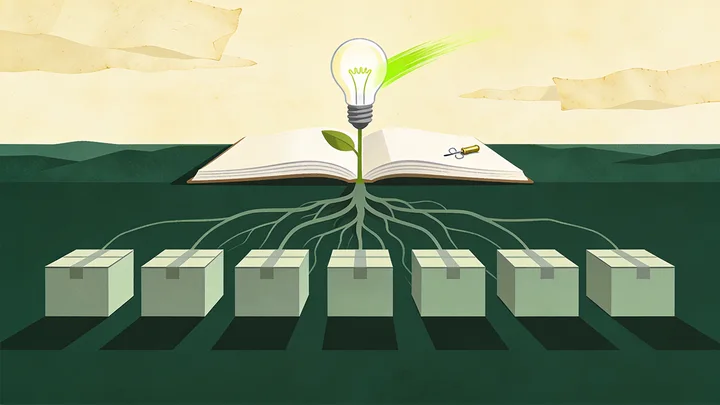
What does it mean to save time and money using an AI-powered platform to file a provisional patent?
This is the practical frame for a real problem: most people who have an idea spend money in the wrong order. They pay a patent attorney before they know if anyone wants the product, or they build a prototype before checking whether something nearly identical already exists.
Using an AI-powered platform to file a provisional patent means running your idea through structured, affordable steps first: market validation, a plain business model, and a prior art search (prior art means any existing patent, product, or public description that resembles your idea) before you spend on legal filing fees. The platform does the early-stage thinking work that used to require three separate paid consultations, and it does it in hours instead of weeks. That is the time and money saved. It does not replace a patent attorney. It gets you to that attorney with a sharper, cheaper, better-informed question.
Why do most first-time inventors lose money before they even file anything?
The money usually leaks out before the patent office is ever involved.
A common pattern: someone has an idea, gets excited, hires a designer or a manufacturer, and spends $2,000 to $10,000 building a prototype. Only then do they search for prior art and discover something similar already exists, or they show it to strangers and learn nobody wants to pay for it.
The order matters. Validation and prior art screening are cheap and fast. Prototyping and legal filing are expensive and slow. Doing the cheap, fast work first is not a shortcut, it is just correct sequencing. This is the core logic behind how the EntreDash process works: idea, then validation, then prior art, then business case, then financial projections, in that order, before anyone builds anything.
What is an AI product strategist, and does it actually help a solopreneur?
A Product Strategist, whether human or built into a platform, asks a specific set of questions: who is the customer, what problem are they actually paying to solve, and what would make them choose this over what they already do.
For someone building alone, without a co-founder or a team to argue with, this role matters more, not less. There is no one in the room to say "wait, who is this actually for." An AI-guided Product Strategist can play that role consistently, at any hour, without needing to be paid a consulting fee.
The honest limit: a strategist, human or AI, cannot tell you your idea will succeed. What it can do is pressure-test the assumptions underneath it, the same way it would in a real strategy session, before you have spent money finding that out the hard way. For a deeper look at how this works for people building without a team, see how you can use AI for customer discovery when you're building alone.
What is a business model canvas, and why do inventors need a version built for them?
A business model canvas is a one-page breakdown of a business idea into its core parts: customer segments, value proposition, channels, revenue streams, cost structure, and a few more boxes in between. It was designed originally for software and services businesses.
Inventors of physical products or novel processes run into a mismatch. The standard canvas does not have a box for "is this defensible" or "does making this involve a manufacturing partner, tooling costs, and lead times." A canvas built for inventors adds that layer: it treats intellectual property and production reality as first-class boxes, not afterthoughts.
This matters because a beautiful business model that ignores a six-month tooling lead time or a competitor's existing patent is not actually a plan. It is a guess with good formatting. If you want to see how this gets stress-tested in practice, this guide on pressure testing a business model canvas walks through where inventors' canvases tend to break.
What are the most common invention validation mistakes?
Most of these mistakes come from skipping a step, not from doing a step badly.
- Validating with friends and family. People who love you are a terrible focus group. They will not tell you the price is too high or the problem is not real.
- Confusing enthusiasm for demand. Someone saying "I'd buy that" in conversation is not the same as someone paying money. Real validation involves a specific ask, a waitlist, a pre-order, a paid pilot, something with a cost attached.
- Skipping the prior art search entirely. Many first-time inventors assume a patent search happens later, after the product exists. That backwards ordering means discovering a blocking patent after tooling is already paid for.
- Treating one positive signal as proof. A single enthusiastic customer conversation gets treated as market validation. It is one data point.
- Building before pricing. Deciding what something costs to make and what someone will pay for it should happen before the CAD file, not after.
- Ignoring the business case until the end. Financial projections get treated as a formality for investors later, instead of a filter that should have killed or reshaped the idea months earlier.
Each of these mistakes is fixable cheaply if caught early. Caught late, each one costs real money and, often, real time that cannot be recovered. For a closer look at how validation and a patent search interact, this article on AI advisory boards and prior art research is worth reading before you file anything.
How does a prior art search actually save money before filing?
A prior art search is not a legal verdict. It is a research step: searching patent databases and public sources for anything that resembles your idea closely enough that a patent attorney would want to know about it.
Doing this early, before hiring an attorney to draft a provisional application, means you walk into that conversation already knowing what is out there. That conversation gets shorter and cheaper because you are not paying attorney hourly rates for research a platform can surface first. Whether something you find changes what "may qualify" for protection is exactly the kind of question a patent attorney would ask, and it is worth raising with one directly. EntreDash's own methodology page explains which databases get searched and how findings get cited, which is useful context before that conversation.
What actually goes into a provisional patent filing, and when should someone file one?
A provisional patent application is a filing that establishes an early date with the USPTO and gives an applicant up to 12 months to file a full, non-provisional application. It is generally less expensive to prepare than a full application, but it still requires a written description detailed enough to support what gets claimed later. If you are weighing drawings as part of that filing, see this breakdown of design patent cost factors.
The honest sequencing question is not "how do I file a provisional patent," it is "am I ready to." Filing before validating the market or checking for prior art risks spending money to protect something that either will not sell or already exists in some form. Filing after doing that groundwork means the description you hand to an attorney is sharper, and the conversation is shorter. Two existing EntreDash guides go deeper on cost sequencing specifically: why cost shouldn't be the first question and why the number should come before you build anything.
How does this all fit together into one workflow?
The honest version of "save time and money" is not a trick. It is doing five things in the right order: shaping the idea, validating it with real people, checking prior art, building a business case, and modeling the financials, before spending on prototypes or legal filings.
A platform built around three advisors, a Product Strategist, an IP Consultant, and a Financial Analyst, exists to walk an idea through exactly that sequence before anyone spends serious money. If you want to see what that looks like with your own idea, EntreDash's free advisory board is the natural place to start, and the IP Education Center has more plain-language background on prior art and provisional filings for anyone who wants to go deeper before that first conversation with an attorney.