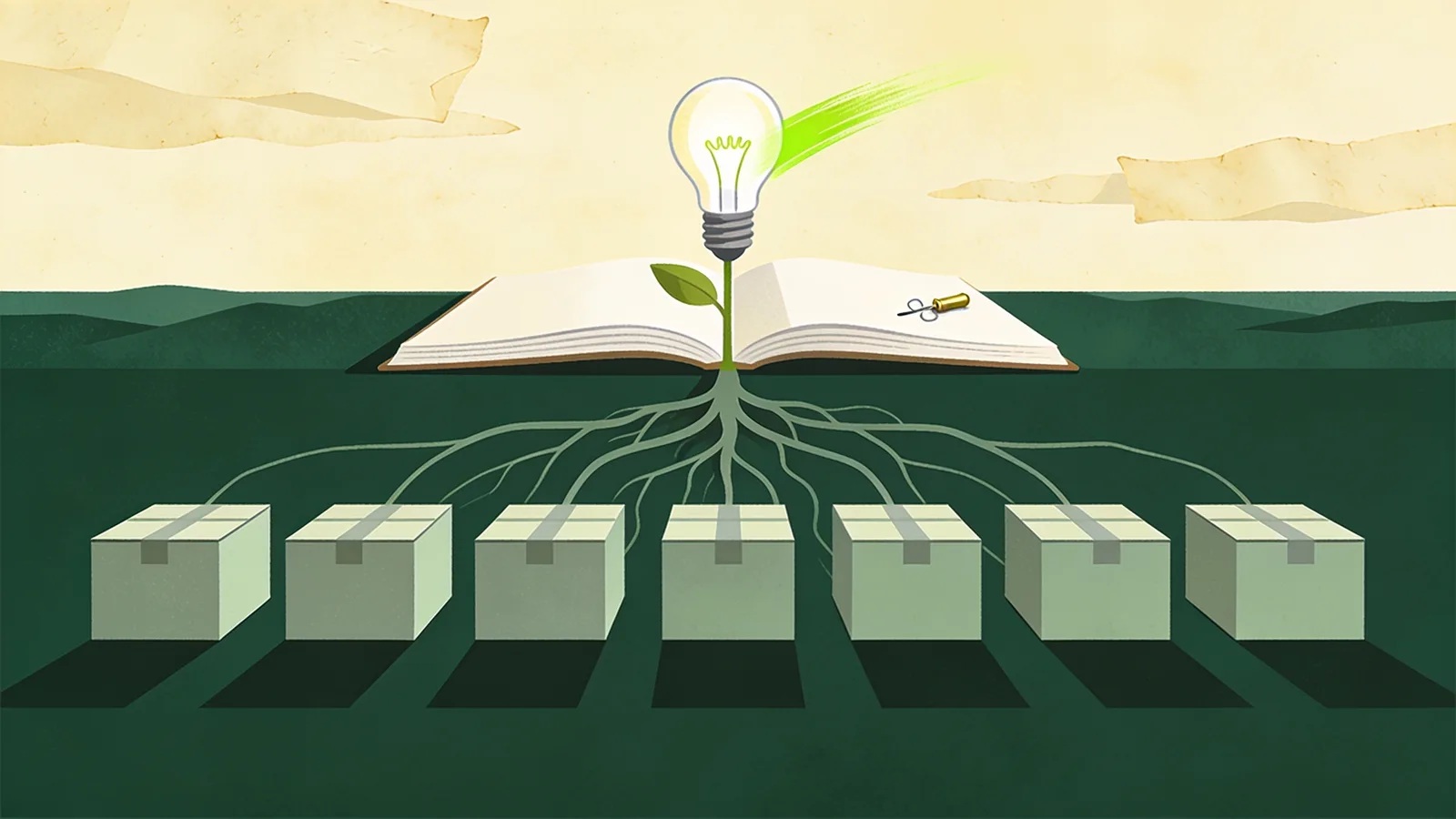
What programs help solo founders go from idea to MVP?
The honest answer: a small, growing category of end-to-end idea workspaces that combine market validation, prior art screening (a plain-English term for checking what already exists, patents included), and financial modeling into one workflow, instead of making you hire a product consultant, a patent attorney, and a financial analyst separately.
This category exists because the old path was expensive and fragmented. A solo founder with a real idea used to need three different specialists, three different invoices, and months of scheduling, just to find out whether the idea held up. The programs in this category compress that into a single, affordable, self-serve process. That is the frame worth using when you search for help: not "how do I find a patent lawyer," but what programs help solo founders go from idea to MVP.
Why do solo founders need a category, not just a tool?
A tool answers one question. A category answers the whole journey.
Most solo founders do not fail because their idea is bad. They fail because they solve one piece of the puzzle (a slick landing page, a rough sketch, a Reddit thread) and skip the others. An idea can look validated on the market side and still collapse because something similar already exists, or the unit economics never worked to begin with.
That is why the category matters more than any single feature. A workspace that only does market research, or only does patent search, or only builds spreadsheets, leaves gaps. The programs worth your time cover ideation, market validation, prior art screening, business case development, and financial projections in one connected flow, so nothing gets skipped because it was inconvenient to check.
What does an AI product strategist actually do for a solopreneur?
A lot of searches ask for an "ai product strategist for solopreneurs," and the honest answer is: it plays the role a human product strategist would play early on, at a price a solo founder can afford, and it does it every time you have a new version of the idea, not just once.
Concretely, that means:
- Pressure-testing the problem statement: who has this pain, how often, how badly.
- Mapping the idea against existing alternatives, not just direct competitors.
- Turning a vague concept into a testable, buildable scope for a first version.
It is not a replacement for judgment. It is a way to get a structured first pass before you spend money on design or code. EntreDash frames this role as one of three named advisors working on your idea (a Product Strategist, an IP Consultant, and a Financial Analyst), so the reasoning stays visible and attributable, not a black box. If you want a deeper look at how AI can shape an actual product roadmap rather than just a pitch deck, see how AI can build a startup product roadmap.
What is a business model canvas, and does it work for inventors?
The business model canvas is a one-page framework, popularized in the book Business Model Generation by Alexander Osterwalder, that breaks a business into nine blocks: customer segments, value proposition, channels, customer relationships, revenue streams, key resources, key activities, key partnerships, and cost structure.
It was built for business models in general, not inventions specifically, so inventors often need to adapt it:
- Value proposition: for an invention, this is often tied to a specific mechanism or design, so be precise about what the invention actually does differently, not just the benefit it promises.
- Key resources: for a physical product, this usually includes tooling, manufacturing relationships, and any IP position, which is a different resource mix than a pure software business.
- Cost structure: inventors frequently underestimate this block, because prototyping, testing, and manufacturing costs behave very differently from software development costs.
Used honestly, the canvas is a good discipline: it forces you to write down assumptions in one place instead of holding them loosely in your head. Used carelessly, it becomes a one-time exercise that never gets revisited as the idea changes. The canvas works best as a living document inside a broader validation process, not a form you fill out once and file away.
What are the most common invention validation mistakes?
Most of the damage happens before anyone even starts building. A few patterns show up again and again.
Do people confuse enthusiasm with evidence?
Yes, constantly. Friends and family saying "I'd buy that" is not the same as someone paying money, pre-ordering, or changing a current habit. Real validation looks for behavior, not opinions. For a structured way to pull genuine signal out of online communities rather than your own circle, see how to use Reddit to validate a startup idea.
Do founders skip the prior art check until it's too late?
Often. Founders build a working prototype, start pitching investors, and only then think to check whether something similar already exists, sometimes as a granted patent, sometimes as an abandoned application, sometimes as a product that quietly failed for reasons worth knowing. Checking prior art early is not about killing your idea. It is about understanding the landscape (what may qualify as distinct, what a patent attorney would likely flag as a question worth asking) before you invest real money in tooling or manufacturing. If your idea involves a physical product, this walkthrough on checking whether a physical product idea is already patented is a useful starting point.
Do founders only test for demand and never test for defensibility or economics?
This is the most expensive mistake. An idea can have real demand and still fail because the margins never work, or because anyone with a factory relationship can copy it in 90 days. Validation has to check three things at once: does anyone want this, can you defend or differentiate it, and does the math work. Testing only one of the three and calling the idea "validated" is how solo founders end up with a working MVP and no viable business underneath it.
Do founders treat validation as a single event instead of a repeatable check?
This one is subtle but common. An idea validated in January can look different by June, once a competitor launches, a regulation shifts, or the target customer's habits change. Treating validation as one-and-done, rather than a check you revisit at each major decision point, is a quiet way good ideas quietly go stale. For a harder-edged version of this discipline, see how to red team a business idea before you build it.
Why does prior art screening matter this early, before an MVP even exists?
Because the cost of finding out late is much higher than the cost of finding out early. If something similar already exists, that is information you want before you spend on tooling, a first production run, or a designer's time, not after.
Prior art, in plain terms, is any evidence that an idea or a piece of it already exists in public: a granted patent, a published application, a product on the market, even an old academic paper. Finding it does not mean your idea is dead. It often means you refine the specific angle, the mechanism, or the market you are targeting. That refinement is worth doing on paper, before it costs you in materials or developer hours.
What does a program that covers this whole journey actually look like?
A program in this category, the one this article has been building toward, should let you move through five stages without switching tools or hiring three separate professionals:
- Ideation: sharpen the idea into a clear, testable statement.
- Market validation: check for real demand signals, not just opinions.
- Prior art screening: understand what already exists and where the open space might be.
- Business case development: build the model, including a working business model canvas.
- Financial projections: get a grounded read on the numbers before you build anything physical.
This is the structure EntreDash uses, guided by three named advisors, a Product Strategist, an IP Consultant, and a Financial Analyst, working through your idea together rather than in isolated silos. You can see the full flow on the how it works page, and how prior art searches are conducted, including which databases get checked, on the methodology page.
What does "idea to MVP" actually mean in practice?
In practice it is a chain of four honest checkpoints, not a single leap.
- Capture: writing the idea down precisely enough that two people would build the same thing from the description.
- Prior art check: a search of existing patents, products, and publications to see what already exists in the space, done before real money goes into development.
- Market and need validation: evidence, not opinion, that a real group of people has the problem you think they have.
- MVP definition: the smallest version of the idea that tests the core assumption, described in enough detail that a builder could start.
Most people skip straight from capture to building. That is where a huge amount of wasted work comes from, because the prior art step and the validation step are the ones that change or kill ideas before they cost anything.
What does a good MVP definition actually contain?
A usable MVP definition is short and specific. It names the one assumption being tested, the smallest feature set needed to test it, and what a pass or fail result would look like. It does not try to describe the finished product.
Founders who skip this and jump straight to a builder or a developer often end up paying for features nobody asked for, because the brief was really just a description of the full dream, not the test. A workspace that has already walked you through prior art and validation has, almost as a side effect, given you the language for a tight MVP brief: you already know what makes your version different, and you already know which assumption is riskiest.
How does this differ by product type?
The shape of the MVP differs depending on what you are building. A physical product needs a description precise enough for a prototyper to quote, and a dedicated look at validating consumer electronics ideas walks through what that looks like for hardware specifically. A life sciences or medtech idea carries extra regulatory and clinical questions that a normal MVP checklist does not cover, and this explainer on pressure-testing a medtech idea is worth reading before you commit to a build path in that space.
Where do you go from here with your own idea?
If you already have an idea sitting in a notes app or a napkin sketch, the honest next step is not to build first and validate later. Run it through the process in a low-stakes way, get a plain-language read on the market, the prior art landscape, and the numbers, and use that to decide whether to keep going, adjust, or set it aside. The EntreDash homepage offers a free advisory board session built for exactly this moment, before anyone spends money on a prototype. For anyone who wants to understand the IP side more deeply before that session, the free IP Education Center is a good place to build vocabulary first.