What is a startup idea pressure test tool?
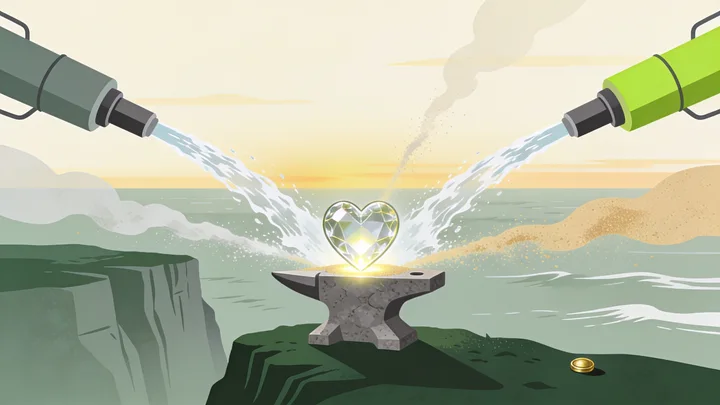
A startup idea pressure test tool is a structured way to stress-test a new idea before you spend real money on it. Instead of asking friends and family if they like your idea, a pressure test asks harder questions: Has this been done before? Would anyone pay for it? Does it hold up under scrutiny from someone who wants to poke holes in it?
For a health or device idea, this process has a name: medtech startup idea validation. It is the specific version of idea pressure testing built for products that touch the body, a diagnosis, or a clinical workflow, where the stakes (and the paperwork) are higher than a typical consumer app.
Why does medtech need its own version of idea validation?
A productivity app and a wearable glucose monitor are not tested the same way. A medtech idea usually carries three extra layers a generic idea checker was never built to handle.
First, regulatory exposure. Anything that diagnoses, monitors, or treats a condition may eventually cross paths with the FDA, and that reality should shape the idea long before a prototype exists.
Second, prior art density. Medical device and diagnostics patents are filed constantly. A pressure test that only searches general Google results will miss most of what actually matters, which is why an adversarial approach to prior art search tends to surface more than a normal search.
Third, stakeholder complexity. A consumer product has one buyer. A medtech product often has a patient, a clinician, a hospital purchasing department, and an insurer, each with different reasons to say no. Medtech startup idea validation is built to test all four at once, not just whether the idea sounds clever.
What does a real pressure test actually check?
A credible pressure test for a medtech idea walks through several distinct questions, not just one score.
- Has this been invented already? This is a search for prior art, meaning any existing patent, product, or published document that describes something similar to your idea. Prior art does not have to be an exact match to matter.
- Is there a real gap, or does it just feel new to you? Plenty of ideas feel original because the inventor has not yet seen the fifteen adjacent versions already on file.
- Who would actually buy or prescribe this? A device can be clinically clever and commercially dead if no one has budget to buy it.
- What would a patent attorney ask first? This is less about getting a verdict and more about knowing which questions to have answers for before that first paid consultation.
- Is the underlying idea patentable, and does that matter for this business? Not every good product needs a patent, and not every patentable idea makes a good business. These are separate questions worth pulling apart early.
How is this different from just Googling your idea?
A quick search tells you whether the exact product exists under the exact name you thought of. It rarely tells you whether a similar mechanism, similar use case, or similar patent claim already exists under different language, which is most of the time.
This is the gap that trips up a lot of first-time inventors. They search, find nothing obvious, and conclude the field is open. Then a patent examiner, or a competitor's attorney, finds the same prior art a real search would have surfaced from the start. If you want the fuller version of this problem, how to check whether a physical product idea is already patented walks through it in more depth.
A pressure test tool built around medtech startup idea validation is meant to close that gap before it becomes expensive.
What role does an AI tool actually play here?
An AI-assisted pressure test is useful for what it is: a fast, structured first pass across patent databases, market signals, and business model logic that would otherwise take a person days to do manually. It is not a substitute for a patent attorney, and it should never be treated as a legal verdict on whether an idea is patentable.
What it can do is give you a clearer, evidence-based starting point. That distinction matters, and it is covered in more depth in what an AI startup idea evaluator can and cannot actually tell you.
What does market validation look like for a medtech idea specifically?
Market validation for a consumer gadget usually means: will people buy this? For medtech, the question splits into layers.
A patient might want it. A doctor might be willing to recommend it. A hospital might not have a budget line for it. An insurer might not reimburse for it. Any one of those can stall an otherwise good idea for years.
This is why product-market fit testing for medtech has to include the buying and adoption chain, not just user desire. The general version of this question, whether AI tools can actually test product-market fit and needs discovery, is a good place to see how that testing works before narrowing it to a clinical context.
What's the honest limit of any pressure test tool?
No tool, human or automated, can promise your idea is patentable or that it will succeed. Whether an idea may qualify for patent protection depends on specifics that only unfold during a real prior art search and, eventually, examination by the USPTO. A pressure test is meant to prepare you for that conversation, not replace it.
The honest goal is narrower and more useful: walk into a strategy session with a patent attorney, or a first pitch to a partner or investor, already knowing where your idea is strong, where it overlaps with existing work, and what questions you have not yet answered. That is a very different starting position than showing up with only a hunch.
How do you actually run a pressure test on your own idea?
A practical sequence looks like this:
- Write the idea down in one paragraph, plainly, as if explaining it to a stranger.
- Search for prior art broadly, not just for your exact wording but for the underlying mechanism.
- Identify who would actually pay, prescribe, or approve the product, not just who would use it.
- Note what a patent attorney would likely ask about novelty, and what a clinician would ask about safety or workflow fit.
- Get a structured read on all of the above before spending money on prototypes, filings, or legal fees.
That fifth step is where a free tool like the EntreDash homepage fits in. It runs your idea through a free AI advisory board that checks prior art, market signal, and business model logic in one pass, using the same medtech startup idea validation lens described here, so you have a documented starting point instead of a guess. You can see the mechanics of that process on how EntreDash works, and how the underlying prior art search is sourced and cited on the methodology page.
What should you do with the results either way?
If the pressure test turns up close prior art, that is not necessarily a dead end. It is information. Ideas evolve based on what already exists, and a clear picture of the landscape often points toward a sharper, more defensible version of the same idea.
If the pressure test comes back clean, that is not a guarantee either. It means the visible landscape looks open right now, which is exactly the kind of finding worth bringing to an attorney for a closer, formal opinion. Either way, you are entering that conversation with a documented starting point instead of a guess, which is the entire point of pressure testing an idea before you build it.