IP Commercialization Strategy for Inventors: What Comes Before a Patent
A commercialization strategy is the plan for how an idea moves from concept to something people can actually buy, and it treats intellectual property as one tool inside that plan, not the whole plan. Most inventors get this backwards. They chase a patent first and ask how to make money second. Flip that order and the patent (if you pursue one) ends up protecting something the market actually wants.
This matters because a patent by itself does not generate revenue. It creates a legal boundary around an idea. What happens inside that boundary, whether anyone builds it, sells it, licenses it, or lets it sit in a drawer, is a business question, not a legal one.
The Order Most Inventors Get Wrong
Here is the pattern that shows up again and again. Someone has an idea. They feel a pull to protect it immediately, so they start researching patent filings before they have answered basic questions like who would buy this, what it would cost to make, and whether something similar already exists.
That instinct is understandable. An idea feels fragile, and filing feels like locking the door. But a patent application is expensive and time-consuming to do well, and it is only worth that investment once you have some confidence the idea has commercial legs.
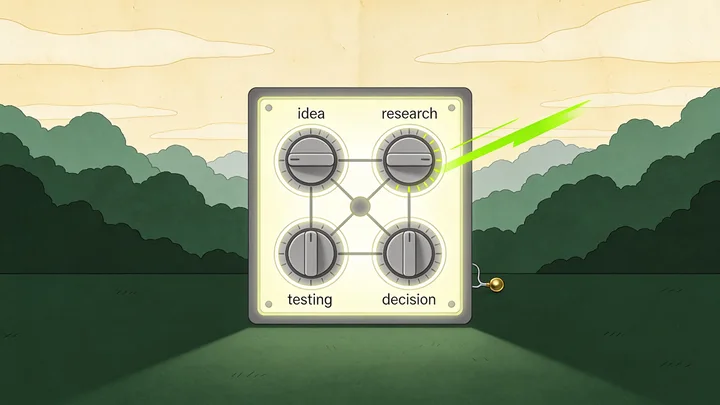
A more useful order looks like this:
- Understand what already exists in the space (the landscape of prior art, meaning previously public inventions, publications, or products that could overlap with your idea)
- Get honest about who would pay for this and why
- Figure out roughly what it would cost to build, make, or produce
- Decide what role IP protection should play, if any, given the first three answers
- Choose a commercialization path: license it, build a company around it, partner with a manufacturer, or something else
Notice that IP strategy sits in the middle of that list, not at the top. It is informed by everything that comes before it.
Why Prior Art Comes First
Before you spend real time or money, it helps to know what has already been tried. A prior art search tells you whether your idea overlaps with existing patents, products, or publications, and it does this before you have committed to a direction.
This is not about killing your own idea. Most searches turn up a mix of close cousins and total misses, and that information is useful either way. If five companies have tried a version of your concept and failed commercially, that is a signal worth examining, maybe about the market rather than the invention itself. If the search turns up nothing close, that is worth noting too, though it is not proof of anything on its own.
AI tools have made a first pass at this kind of search faster and more accessible than it used to be, but they have real limits worth understanding before you rely on one. Using AI for Prior Art Search: What It Can and Can't Do walks through where these tools help and where a human review still matters. If you want to see how a structured search actually gets conducted, including which databases get checked and how findings get cited, the methodology page lays that out plainly.
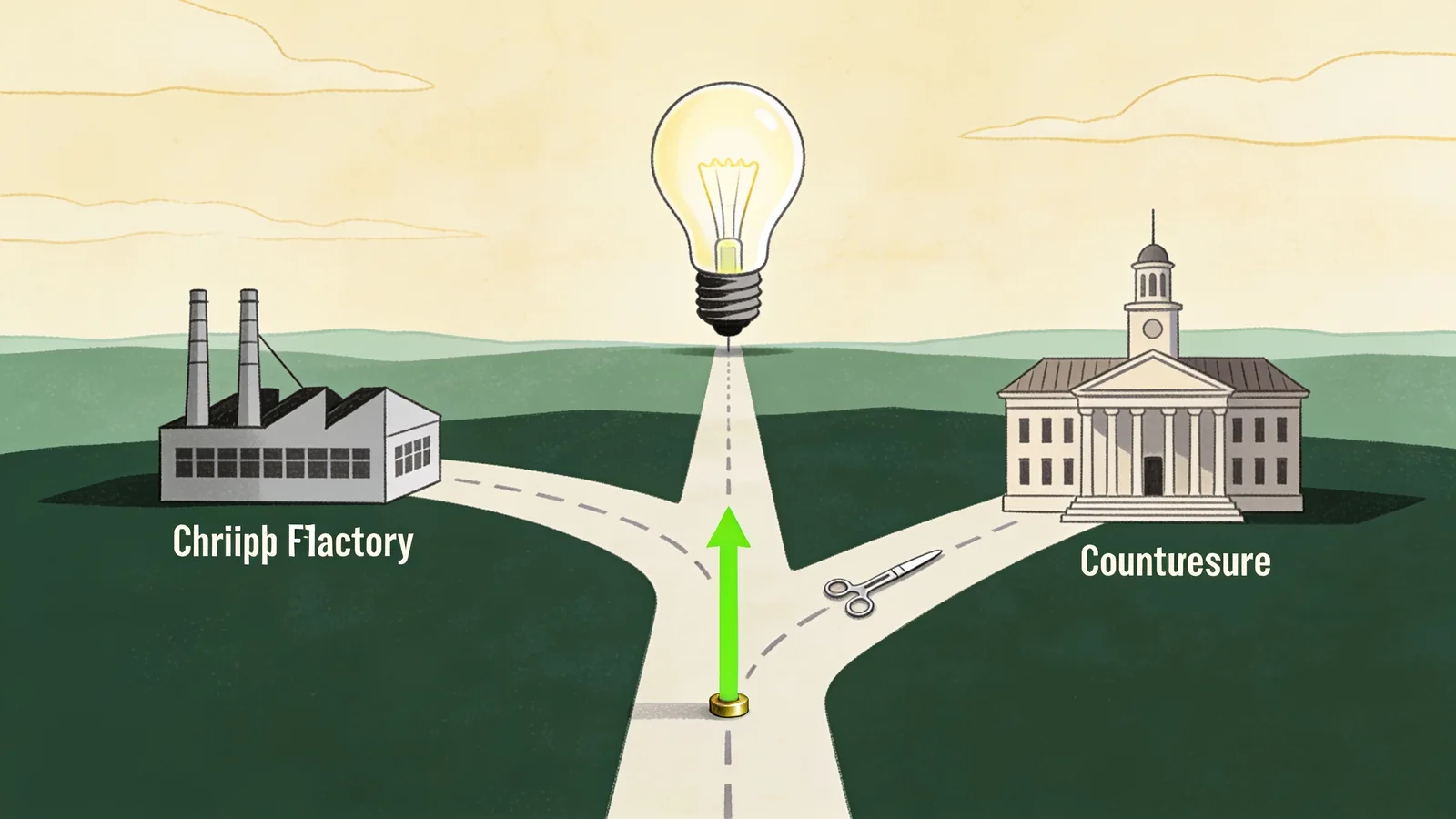
Commercialization Is Not One Path, It's a Fork
Once you have a sense of the landscape, the real strategic question appears: how do you actually want this idea to reach the world? There are a handful of common paths, and they call for different kinds of IP protection.
Licensing
You develop the idea to a point of credibility, protect the core of it, and then license it to a company already positioned to manufacture and distribute it. This path tends to reward a tightly scoped, well-documented invention over a sprawling product line. A licensee wants clarity about what they're buying rights to.
Building the company yourself
Here the invention is the seed of a business, not the whole business. IP protection matters, but so does everything else: pricing, distribution, manufacturing, customer acquisition. An idea can be technically sound and commercially dead if nobody has worked out how it reaches a buyer. This is the territory covered in The Founder Innovation OS: A Practical Guide for Solo Founders Building Alone, which looks at the operational side of turning an idea into a going concern.
Partnership or co-development
Sometimes the fastest path to market is teaming up with a company that already has manufacturing, distribution, or a customer base you don't. This path usually calls for clear agreements about who owns what, and it rewards inventors who have already thought through their IP position before conversations start, not during them.
None of these paths is inherently better. The mistake is picking one by default, usually "build the company myself," without weighing the others against what the idea and the market actually call for.
What Role Should a Patent Actually Play?
This is where it helps to slow down. A patent may qualify as the right tool if the invention has a defensible technical core that competitors would otherwise copy easily and cheaply. It may be less useful if the real value of your idea is in execution, brand, or relationships rather than a novel mechanism.
Whether a specific idea is patentable is the kind of question a patent attorney would ask in detail, using facts a general article cannot know. What can be said generally is that novelty and non-obviousness are factors that tend to matter, and a clean prior art picture makes that conversation with an attorney faster and cheaper, because you walk in already knowing the landscape instead of paying someone to discover it for you.
This is really the heart of what commercialization strategy does before you ever talk to an attorney: it turns a vague sense of "I should protect this" into a specific, informed question you can actually ask.
Pressure Testing Before You Commit
A good next step, before spending money on filings or formal legal advice, is pressure testing the idea from multiple angles: technical feasibility, market demand, cost to produce, and competitive landscape. This is different from a patent search. It's a business reality check.
A Startup Idea Pressure Test Tool: What It Is and How to Use One covers how to run this kind of check systematically rather than relying on gut feeling or a single friend's opinion. The goal is to surface weak points early, when they're cheap to fix, rather than after you've filed paperwork or signed a manufacturing contract.
This is also where a structured strategy session earns its keep. Rather than guessing at your own blind spots, a session that walks through prior art, market fit, and commercialization options together gives you a fuller picture than any single search or spreadsheet. If you want to see what that looks like end to end, how it works breaks down the sequence.
Turning the Picture Into a Verdict
At some point, all this research needs to collapse into a decision, what we'd call a verdict: proceed toward protection, proceed toward market without formal protection yet, pivot the idea, or shelve it for now. That verdict should rest on the layered picture built above, not on a single data point like "nobody else makes exactly this."
A useful verdict answers three questions honestly:
- Is there a real gap in the market this idea fills, or does it just feel new to you
- Is the cost of building or protecting this proportional to what it could realistically earn
- Does the competitive landscape (from your prior art review) leave room to operate, or is it already crowded with close variants
Getting to a clear verdict on your own idea is exactly what the free assessment on the EntreDash homepage is built for. It walks through your idea against these same questions and gives you a starting point before you spend money on legal work or manufacturing quotes.
The Cost of Skipping This Step
Inventors who skip straight to "how do I patent this" often end up with a document that protects something the market never asked for, or that costs more to defend than it will ever earn. Inventors who skip straight to "how do I sell this" often build a product with no defensible edge, easy for a better-funded competitor to copy the moment it gains traction.
Commercialization strategy is the bridge between those two failure modes. It asks you to understand the landscape, know your buyer, price the build, and only then decide how much legal armor the idea actually needs. That order protects your time and your money more than any single filing ever could.
If you're still early and want to understand the fuller landscape of tools and frameworks available to someone building alone, the IP Education Center is a reasonable place to keep learning before you commit to a specific path.