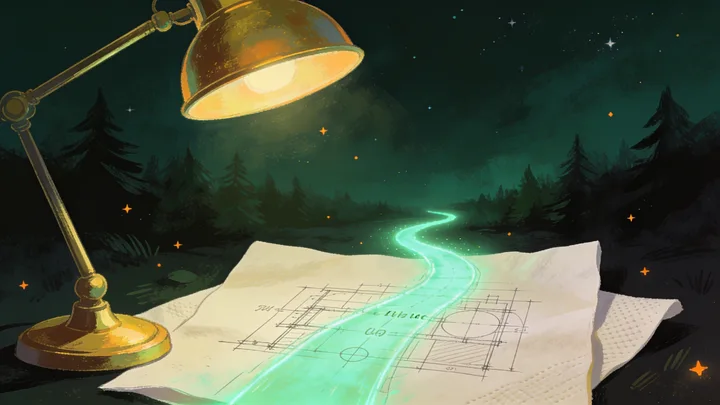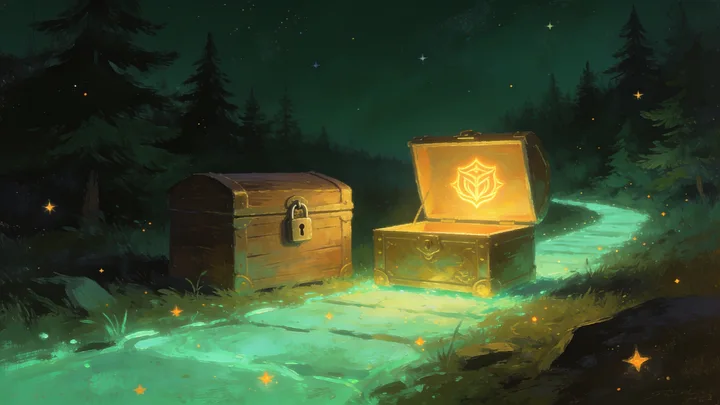
It usually starts small. A thought in the shower. A mutter on the drive home. A note typed with one thumb at two in the morning because sleep would not come and the idea would not leave.
Why doesn't this exist?
Most of those thoughts fade by breakfast. A few do not. If you are reading this, you probably have one that did not, and you are quietly wondering whether it is worth doing something about.
Here is the honest answer: you cannot know yet. Not because the idea is bad, but because "is this a good idea" is really four different questions wearing a trench coat. The path from a spark to a real business is the work of answering them, one at a time, in the right order. This is what that path actually looks like.
First: is there a real need?
The most expensive mistake an inventor can make is falling in love with a solution before confirming anyone has the problem. It feels productive to jump straight to sketches and prototypes. It is not. It is just a more elaborate way of guessing.
So the first step is not building. It is validating. Who actually feels this problem, how often, and how badly? What are they doing about it today, even if what they are doing is clumsy or expensive or nothing at all?
On EntreDash, this is the free first session. You describe your idea in plain words, and a product strategist walks you through a structured conversation, the same questions a good advisor would ask, minus the jargon and the hourly rate. At the end you get a memo: an honest read on whether the need is real, grounded in market data, not a pat on the head.
Sometimes the verdict is encouraging. Sometimes it tells you the market is smaller than you hoped. Both are worth knowing before you spend a dollar.
Second: is it yours to claim?
If the need is real, the next question is whether the idea is actually new, and whether anyone has already claimed it.
This is where most people get stuck, because the honest way to find out has historically meant paying a patent attorney several thousand dollars for a search you could not evaluate yourself. So people either skip it, and build on top of someone else's patent by accident, or they never start at all.
EntreDash screens your idea against real patent records, the same public databases a searcher would use, and gives you a clear verdict: go, pivot, or stop, with the reasoning laid out so you understand it. It does not replace a patent attorney. It gets you ready for one, so that when you do call, you are asking sharp questions instead of paying someone to tell you what a free search could have.
Third: can you actually build it?
An idea that is real and novel still has to become a thing. This is where a vague concept turns into a buildable design: the components, the materials, how the pieces connect, the drawings that a prototyper or a patent draftsperson can actually use.
Breaking an idea down this way does two jobs at once. It forces the fuzzy parts into the open, the "and then somehow it works" steps you had been glossing over. And it produces the structured foundation that everything downstream depends on, from a provisional filing to a first prototype.
Fourth: can it be a business?
Finally, the question underneath all the others. Even a novel, buildable invention is not automatically a business. What would it cost to make? Who would pay, and how much? What does the path from one unit to a thousand actually look like?
This is the business case: scenario-based projections, a preliminary sense of what the thing could be worth, and the beginnings of a plan. Not a fantasy hockey-stick chart, an honest map of what it would take.
The through-line: you learn by doing
Notice what these four steps have in common. None of them requires you to already be an expert. You do not read a textbook on patents and then start. You start, and the understanding comes from doing the work on your own idea, with guidance at each step. The Education Center is there when you want the why behind a step, but the spine of the whole thing is your invention, moving forward.
That is the difference between a pile of information and a path. Information tells you what a provisional patent is. A path tells you whether you need one yet, and hands you the next step when you do.
Where this goes
From here, the journey keeps going: connecting with a real USPTO-registered patent attorney when you are ready to file, finding a prototyping partner, and eventually taking the thing to market. But you do not need to see the whole staircase to take the first step. You just need to know the first step is real, and free, and yours to take right now.
Your spark does not have to stay a 2am thought. It can become something you own.
Start with the free session. Describe your idea in a sentence or two at entredash.com, or create a free account to save your work as you go. No credit card, and nothing you enter is ever used to train AI.