What is a "hard reasoning" strategy session, exactly?
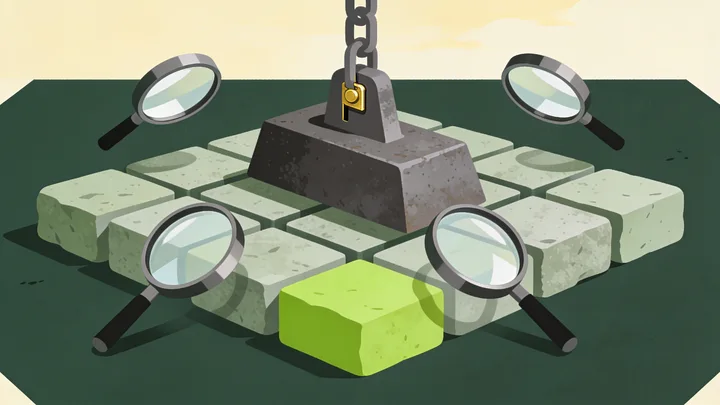
A hard reasoning strategy session is a working meeting where an idea gets pressure-tested against evidence, not just opinion. The goal isn't encouragement. It's a verdict: does this idea hold up when someone asks the uncomfortable questions about market demand, intellectual property, and money.
Most founders get one kind of feedback loop: friends, a co-founder, maybe a mentor who's busy. That feedback is usually kind. It's rarely rigorous. A hard reasoning session flips that. It's built to surface the weak points early, when a fix costs an afternoon instead of a rebuild.
What makes an AI advisory board different from a single AI chatbot?
A chatbot answers whatever you ask it, in whatever order you ask. An advisory board works from three distinct roles, each with a different job and a different set of blind spots to cover.
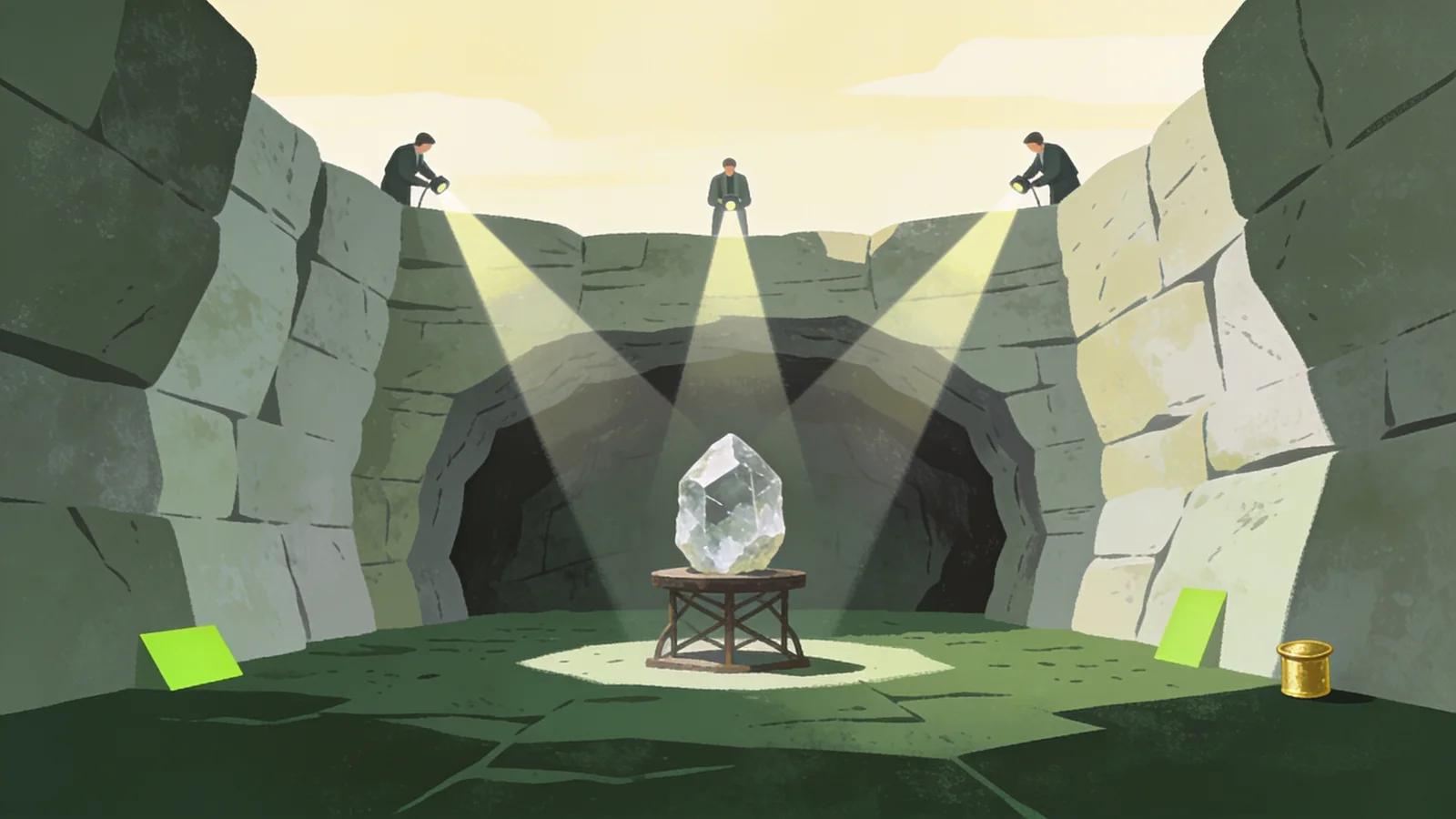
EntreDash runs this as three advisors: a Product Strategist, an IP Consultant, and a Financial Analyst. Each one reads the same idea through a different lens. The Product Strategist asks whether anyone actually wants this and whether the market is already crowded. The IP Consultant asks what's protectable and what prior art (existing patents, products, or public disclosures that describe something similar) might already be out there. The Financial Analyst asks whether the business case adds up before a single dollar gets spent building anything.
That structure matters more than it sounds. A single-lens review tends to answer the question it's best at and skip the rest. Three lenses, applied to the same idea in the same sitting, is closer to what a real advisory board does, just faster and more affordable. You can see the full breakdown of what an AI advisory board for startup founders actually is if you want the mechanics behind each role.
Who are the three advisors and what does each one push back on?
The Product Strategist pushes back on assumptions about the customer. Is this solving a problem people already pay to solve, or a problem you personally find annoying. It looks at market validation and existing competitors before letting the idea move forward.
The IP Consultant pushes back on originality. It doesn't tell you whether your idea IS or ISN'T patentable, that's a determination only a patent attorney can make. What it does is screen for prior art, the kind of question a patent attorney would ask before you ever book a paid consultation. It flags what's worth examining further and what's already well covered by existing work.
The Financial Analyst pushes back on the numbers. What does this cost to build, what would it need to charge, and does the math survive a slow first year. This is often where an idea that sounds exciting on a walk starts to look shaky on a spreadsheet, and that's the point.
What does a strategy session actually look like, step by step?
A session usually moves through a fixed sequence rather than an open-ended chat:
- You describe the idea in plain language, no pitch deck required.
- The Product Strategist checks it against market signals and comparable products.
- The IP Consultant runs a prior-art screen and flags overlap worth a closer look.
- The Financial Analyst builds a rough cost and revenue picture.
- All three positions get combined into a single verdict with specific next steps.
The result reads less like a motivational note and more like a memo. You'll see where the idea is strong, where it's thin, and what to fix before you spend real money. For a walk-through of what this looks like end to end, see how it works.
Can an AI advisory board catch things a human mentor might miss?
A good human mentor brings judgment and experience an AI board doesn't have. What an AI board brings is consistency and speed: it applies the same three-lens scrutiny every time, doesn't get tired, and doesn't soften a hard truth to protect a friendship.
That combination catches specific things: a competitor you didn't know existed, a cost assumption that's off by a factor of three, an IP overlap you'd never have thought to search for. None of these require genius, they require someone actually checking. Most early-stage ideas skip the checking step because it's tedious and there's no one assigned to do it.
Other founders have walked their own ideas through this exact process; the account of what happens when you walk an idea through an AI startup advisory board covers what typically surfaces in that first pass.
What kinds of decisions is this actually good for?
This format earns its keep on decisions where being wrong is expensive: whether to file a provisional patent application, whether to quit a job for the idea, whether to spend on a prototype, whether to bring in a co-founder or investor.
It's less useful for decisions that are cheap to reverse, like naming or color choices. Save the hard reasoning session for the calls that would cost weeks or thousands of dollars to undo. If your idea already has a rough business model sketched out, a session can also stress test that business model canvas rather than just the concept itself.
How much does it cost to run a strategy session compared to hiring separately?
Hiring a product consultant, an IP attorney for a preliminary search, and a financial modeler separately typically runs into the thousands of dollars before you've validated anything. That's a reasonable cost once an idea is proven, but it's a heavy bet to place on an idea that's still just a hunch.
An AI advisory board session compresses that same three-part scrutiny into a single sitting, at a fraction of the cost, precisely so the expensive human experts get brought in later, once the idea has already survived a first round of scrutiny. Pricing for going deeper, including full prior-art searches and financial modeling, is laid out on the plans page.
What kind of hard questions actually get asked in a session like this?
A useful session does not stay comfortable. Expect questions such as:
- Who specifically has this problem today, and how are they solving it without you
- What would have to be true for a competitor to copy this in under a year
- What does the idea cost to build, staff, and sell before it earns a dollar
- Is there existing prior art close enough that the defensible parts of this idea need rethinking
- What is the actual unit margin once acquisition cost is subtracted
None of these questions are exotic. They are the same ones an accelerator screener, an investor, or a patent attorney would ask in the first fifteen minutes. The point of the session is to hear them earlier, from someone other than a stranger who controls your funding.
Is a session like this worth doing before talking to an accelerator or investor?
Accelerators, incubators, and investors are running their own due-diligence filter on every idea that lands on their desk. An idea that has already been pressure-tested across product, IP, and finance arrives further along than one that has only been pitched to friends.
Running an idea through this kind of session first is closer to a dry run for that filter than a substitute for it. It will not replace a lawyer, an accountant, or a term sheet negotiation. It will tell you, before any of those conversations, whether the idea has a coherent case behind it.
If the idea is still living in a notes app or a shower thought, a free session is the fastest way to find out what a Product Strategist, an IP Consultant, and a Financial Analyst would each say about it, before spending a weekend or a dollar on a prototype. You can start that on the EntreDash homepage, or browse the free IP Education Center first if you want the background before the session.
Can this replace talking to a patent attorney?
No, and it should not try to. An advisory board session is educational and strategic, not legal advice. It cannot tell you whether your idea qualifies for a patent, and it will not make legal predictions.
What it can do is sharpen the questions you bring to an attorney. Instead of walking in with "is my idea patentable," a founder who has been through a hard reasoning session walks in with a specific list: here is what turned up in a prior art search, here is the closest existing product, here is the part of the mechanism that seems most novel, here is the business risk that worries me most. That is a much more efficient use of a paid legal hour.
The search itself matters too. A credible session should show its work, which is why it helps to understand which databases get searched for prior art and how findings get cited before trusting any output.
How do you actually start one of these sessions?
You don't need a business plan or a deck. You need a description of the idea, in your own words, and about fifteen minutes.
The free entry point is the homepage assessment, where the same three advisors review your idea and hand back an initial verdict. From there, if the idea holds up, EntreDash's workflow carries it into deeper prior-art screening and financial modeling. Start with a free strategy session to see where your own idea stands, or browse the IP Education Center first if you want to understand the terms before you walk in.
The honest version of this advice is simple: an idea that survives three rounds of pointed questions is worth building. One that doesn't survive them is worth knowing that now, not after six months of work.