What's the real difference between an AI startup advisor and ChatGPT?
A tool like ChatGPT is a generalist. It will talk to you about your idea, your marketing plan, your dog's diet, and your dinner, all in the same conversation, with no memory of what actually matters for building a business.
An AI startup advisor built for the 0-to-1 journey, like EntreDash, is a specialist workflow. It runs your idea through a structured process, ideation, market validation, a prior-art screening (a search of existing patents and public disclosures to see what already exists), a business case, and financial projections, using the same evidence-based checkpoints a real advisory team would use.
The short version: ChatGPT is a conversation. A structured advisor is a process with a verdict at the end.
Why doesn't a general chatbot catch what a specialized advisor catches?
Ask ChatGPT if your idea is good, and it will usually say something encouraging. It is trained to be helpful and agreeable in conversation, not to stress-test an idea against real market data or existing patents.
This matters because the two failure modes founders hit most often are not "I never thought of this feature." They are: someone already built this, or the numbers don't work at the volume I can realistically sell. A general chatbot rarely surfaces either one clearly, because it is not searching structured databases or running your assumptions through a financial model. It is predicting plausible-sounding text.
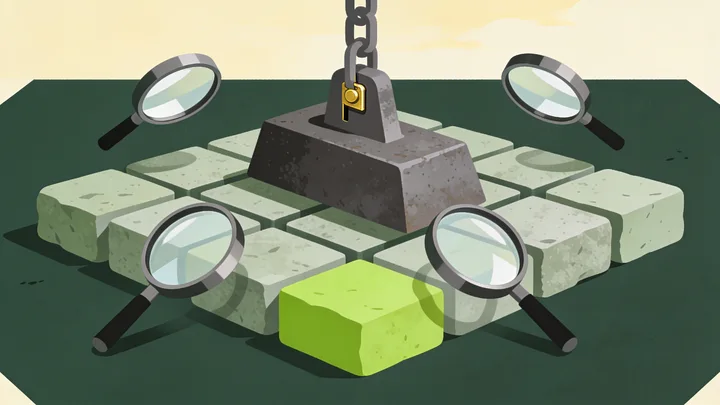
A specialized advisory process is built around three distinct lenses instead: a Product Strategist who checks market fit, an IP Consultant who looks at prior art, and a Financial Analyst who checks whether the business case actually holds up. Naming those roles matters, because each one is looking for a different kind of failure.
Can ChatGPT actually check for prior art?
Not reliably, and this is one of the more important gaps to understand.
Prior art is the term patent professionals use for existing patents, published applications, and other public disclosures that show something similar to your idea already exists. Checking it properly means searching structured, current databases, not asking a language model to recall what it "knows," which may be outdated, incomplete, or simply invented.
A general chatbot can describe what prior art means. It cannot run a defensible search against patent databases and hand you a cited screening. That is the kind of question a patent attorney would ask before spending real money on drafting, and it is also the kind of check an IP-aware advisory process is built to run early, before a founder spends on a prototype or a filing. If you want to see how a structured process actually sources and cites those findings, EntreDash's methodology page walks through which databases get searched and how.
None of this means a chatbot conversation is useless for early brainstorming. It means a prior-art screening is a distinct, more rigorous step, one that benefits from a repeatable method rather than an improvised chat.
Does ChatGPT give a real financial projection, or just a guess?
Usually just a guess dressed up in confident language.
Ask a general chatbot to project your revenue for the next three years, and it will produce numbers. Those numbers are a pattern completion based on similar-sounding business plans it has seen, not a model built from your actual assumptions about pricing, cost of goods, customer acquisition, or unit economics.
A financial analysis worth trusting starts from your specific inputs and builds a case from there: what you plan to charge, what it costs to make or deliver, how many customers you'd need at that price to reach a viable business. That is closer to what a financial analyst does with a client, methodically, not conversationally.
This is also where a lot of ideas quietly fail before anyone notices. A product can be genuinely clever and still not be a business, if the math behind it doesn't hold at realistic volumes. A structured process is built to surface that early, rather than let a founder discover it after months of building.
So is a chatbot ever the wrong tool to start with?
Not exactly wrong, just incomplete for the job of validating an idea.
A general chatbot is a fine place to talk through a rough concept, name it, sketch the first version of the pitch. That early, loose thinking has real value. Several of the practical steps that come later, like figuring out how to explain your invention to a manufacturer or how to pitch an invention with visuals, still benefit from that kind of open brainstorming first.
But once an idea moves from "interesting thought" to "thing I might actually build," it needs something more disciplined: a market check, a prior-art screening, and a financial gut check, delivered as an honest verdict rather than an agreeable chat. That is a different job, and it calls for a different kind of tool.
What does a structured advisory process actually check that a chat doesn't?
Four things tend to separate a real evaluation from an open-ended conversation:
- A defined market check. Does a real audience exist, and is it big enough to matter.
- A prior-art screening with sources. Not "I think this might exist," but a search against actual databases with citations attached.
- A financial model built on your inputs. Pricing, costs, and volume run through an actual model, not a plausible-sounding paragraph.
- A clear verdict. A summary that tells you whether the idea looks viable, defensible, and financially grounded, or where it currently falls short.
A general chatbot can touch on all four in conversation. It rarely does all four rigorously, in sequence, with a strategy session that ends in something you can act on.
How does this fit into the bigger 0-to-1 journey?
Validating the idea is the first checkpoint, not the whole journey. Once an idea clears that bar, most founders move toward tracking how its patentability picture might evolve, sketching or modeling it, and eventually building a prototype.
Those later steps have their own well-documented questions worth reading up on, from whether you need a 3D model before you build anything to how much an invention prototype typically costs. But none of that spending makes sense until the idea itself has cleared a real check, not just a friendly chat.
What's a reasonable way to test this for yourself?
Try both, and notice the difference in what each one actually gives you back.
Open a chat with a general-purpose AI and describe your idea. Notice how quickly it agrees with you, and how little it asks about your numbers or checks for anything resembling existing patents.
Then run the same idea through a structured process built specifically for this stage, like the free assessment on the EntreDash homepage, and compare the outputs. One gives you conversation. The other gives you a verdict, three distinct advisor perspectives, and a clearer sense of what to fix before you spend real money. For a fuller picture of how that process works end to end, the how it works page breaks down each stage, and the free IP Education Center is a good next stop if the prior-art piece raises new questions.
Either way, the goal is the same: know what you're actually dealing with before you build.