How much does an invention prototype cost?
There is no single number. A rough 3D-printed shape and a production-intent, tooled prototype are two different purchases, and the price gap between them is enormous.
At the low end, Fictiv's prototyping guide notes that simple 3D-printed parts can run under $50. At the high end, the same guide puts injection-molded prototypes with tooling at $1,000 to $10,000 or more. A design studio's own pricing page, Analogy Design, puts a full production-intent build at $30,000 to $150,000 or higher once connected hardware is involved.
The honest way to think about this is not "what does a prototype cost" but "what does this stage of prototype cost, in this material, from this kind of provider." The table below breaks that out.
Typical cost by prototype type
| Prototype type | Typical cost | Source |
|---|---|---|
| Simple 3D-printed part | About $9 to $95 depending on size, material and provider | All3DP/Craftcloud real quotes; Protolabs FAQ |
| SLA or nylon 3D print | About $22.81 to $126.84 delivered for small parts | All3DP/Craftcloud real quotes |
| CNC machined part | About $65 to $1,000+ | Protolabs FAQ; Fictiv guide |
| Urethane-cast parts | About $200 to $5,000+ | Fictiv guide |
| Injection-molded prototype with tooling | About $1,495 to $10,000+ | Protolabs FAQ; Fictiv guide |
| Design-firm looks-like prototype | About $300 to $2,000 | Analogy Design |
| Design-firm works-like prototype | About $2,000 to $20,000 | Analogy Design |
A few things explain why the ranges inside each row are so wide, and the next sections walk through them.
Why does the same part cost so differently in different places?
Minimum order charges and shipping do a lot of the damage on small parts. All3DP pulled ten real Craftcloud quotes and found a phone stand that cost $12.85 to print but $23.10 once a supplier minimum and shipping were added. A miniature model went from $18.44 in FDM PLA to $72.59 delivered once printed in SLA resin instead. All3DP is upfront that these are snapshots, not fixed price lists, and that Craftcloud is its own service, so treat the numbers as a sense of scale rather than a quote.
Process matters too. Protolabs' FAQ lists 3D-printed parts starting around $95, CNC machined parts starting around $65, and rapid injection molding starting around $1,495, with CNC turnaround of 1 to 3 business days. The jump from printing to machining to molding is not just about material. It reflects setup time, tooling, and the precision each process can hold.
What actually drives the price up or down?
A handful of variables explain most of the swing between a prototype that costs $50 and one that costs $15,000.
- Process. 3D printing is generally cheapest and fastest. CNC machining costs more but holds tighter tolerances, with Protolabs reporting SLA tolerances around ±0.002 in for the first inch plus a small percentage per extra inch, and SLS and MJF holding slightly looser tolerances. Injection molding costs the most upfront because of tooling, but drops per-unit cost at volume.
- Material. FDM filament runs about $20 to $30 per kilogram spool, while a liter of general-purpose SLA resin runs about $79. Resin costs more per unit but, as Formlabs notes, gives the smoothest surface finish, while FDM shows visible layer lines and SLS has a slightly rough, grainy texture.
- Who builds it. A home printer, a library makerspace, or a hired design firm are three very different cost structures, covered below.
- Number of iterations. Almost no invention gets it right on the first build. Each revision round adds material and, if you are paying a shop, labor.
- Finish and fidelity. A rough proof-of-concept can tolerate visible layer lines and a loose fit. A prototype meant to go in front of investors or retail buyers needs tighter tolerances and a cleaner surface, which costs more in material and machine time.
For a deeper walkthrough of which printing process fits which stage, see this comparison of FDM, SLA and SLS for invention prototypes.
Should I 3D print it myself, use a library, or hire a service?
All three are real options, and the right one depends on budget and how much hands-on control you want.
Printing it yourself. A Bambu Lab A1 mini starts from $199 (typically $219), and the full-size A1 starts from $259 (typically $299), at the time of writing. A Prusa MK4S kit runs $709 to $729, or $999 assembled. If you want resin-grade smoothness, the Formlabs Form 4 starts from $2,625. Buying a printer only makes financial sense if you expect to print many parts or iterations.
Using a library or makerspace. Plano Public Library in Texas charges $0.20 per gram with a $1.00 minimum, though files must be in STL format, prints are capped at 10 objects per submission, turnaround is not guaranteed, and the library states that submitted objects must not infringe anyone's IP. Maker Nexus, a Sunnyvale, California makerspace, charges $75 a month for a limited membership that includes access to its 3D printing lab (FDM printers and a Form 3 resin printer), or $160 a month for a full membership that adds the machine shop and CNC router, with required safety training.
Using an online service. Protolabs, Xometry and Craftcloud-connected suppliers will quote and ship a part without you owning any equipment. This is usually the fastest route to a single accurate part, but costs add up faster if you need many revisions. For a fuller rundown of these options, see this guide on where to get a prototype 3D printed.
If you are not sure how to go from a sketch to a file a printer or shop can actually use, this walkthrough on the 3D printing process for an invention prototype covers the steps in order.
Do I need a looks-like prototype or a works-like prototype first?
This distinction matters more than most inventors expect, and it changes which row of the cost table applies to you.
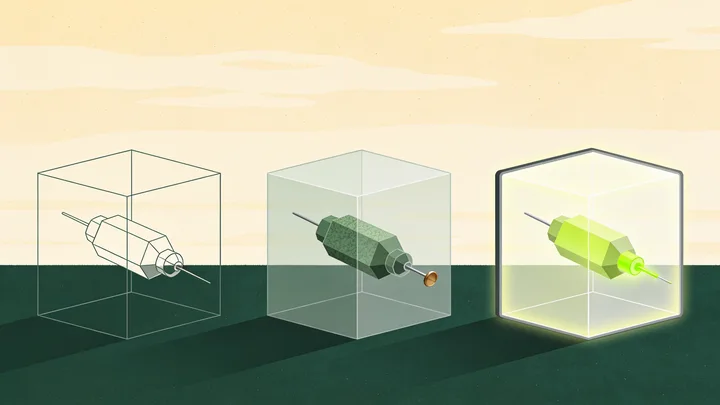
The University of Maine's Advanced Manufacturing Center describes a "looks like" prototype as one that demonstrates color, shape, feel and size, noting that many rapid prototype or 3D printed parts fall into this category. A "works like" prototype, often called a proof of concept, may not be pretty, but it proves the idea actually functions. Combined looks-like-and-works-like builds come later in the process.
Analogy Design's own pricing guide reflects that order in dollar terms: looks-like prototypes run about $300 to $2,000, works-like prototypes about $2,000 to $20,000, and a full alpha build about $15,000 to $40,000, with production-intent builds going from $30,000 up past $150,000, and connected hardware adding another $5,000 to $30,000 on top. There is no reason to pay for works-like fidelity if all you need right now is something to show how it should look and feel. For a closer look at when each type actually makes sense, see this piece on looks-like versus works-like prototypes.
What about confidentiality when I upload a file to get a quote?
It is worth reading a provider's terms before uploading anything. Craftcloud's terms state plainly that its service is "not designed for elevated confidentiality levels," and that your file is passed along to whichever supplier you select on the marketplace. Protolabs says an NDA is not necessary to do business with it, and that uploads are encrypted and covered by confidentiality obligations. Xometry says it keeps design content secure and private, and can execute an NDA if a customer requires one.
None of these terms, an NDA included, are the same thing as patent protection, and none of them make an idea patentable or not. If you are weighing how widely to share a file before you have any formal protection in place, this article on NDAs before sharing an invention and a conversation with a patent attorney or agent are the right next steps, not a provider's confidentiality clause.
How do I figure out a realistic budget for my own prototype?
Start by matching your stage to the table above. A rough shape to show friends and family is a very different purchase from a working unit meant to go in front of a manufacturer or investor.
From there, build in room for revisions. Few prototypes come out right on the first pass, and each round of changes adds material cost and, if you are paying someone else, labor. EntreDash's free hardware development cost calculator is a quick way to sketch out a fuller budget across prototyping, tooling and small-batch production before you commit money to any one path.
What's the honest bottom line on prototype cost?
There is no fixed price for an invention prototype, because the term covers everything from a $9 3D-printed bracket to a $150,000 production-intent build. What is fixed is the order that keeps the eventual price reasonable: figure out what stage you actually need, pick the process that matches it, and only then decide how much fidelity is worth paying for. Spending a small amount on a looks-like model to show the concept is sensible. Spending thousands on an injection-molded, works-like unit before you know whether the shape even holds up in someone's hand is the mistake worth avoiding.