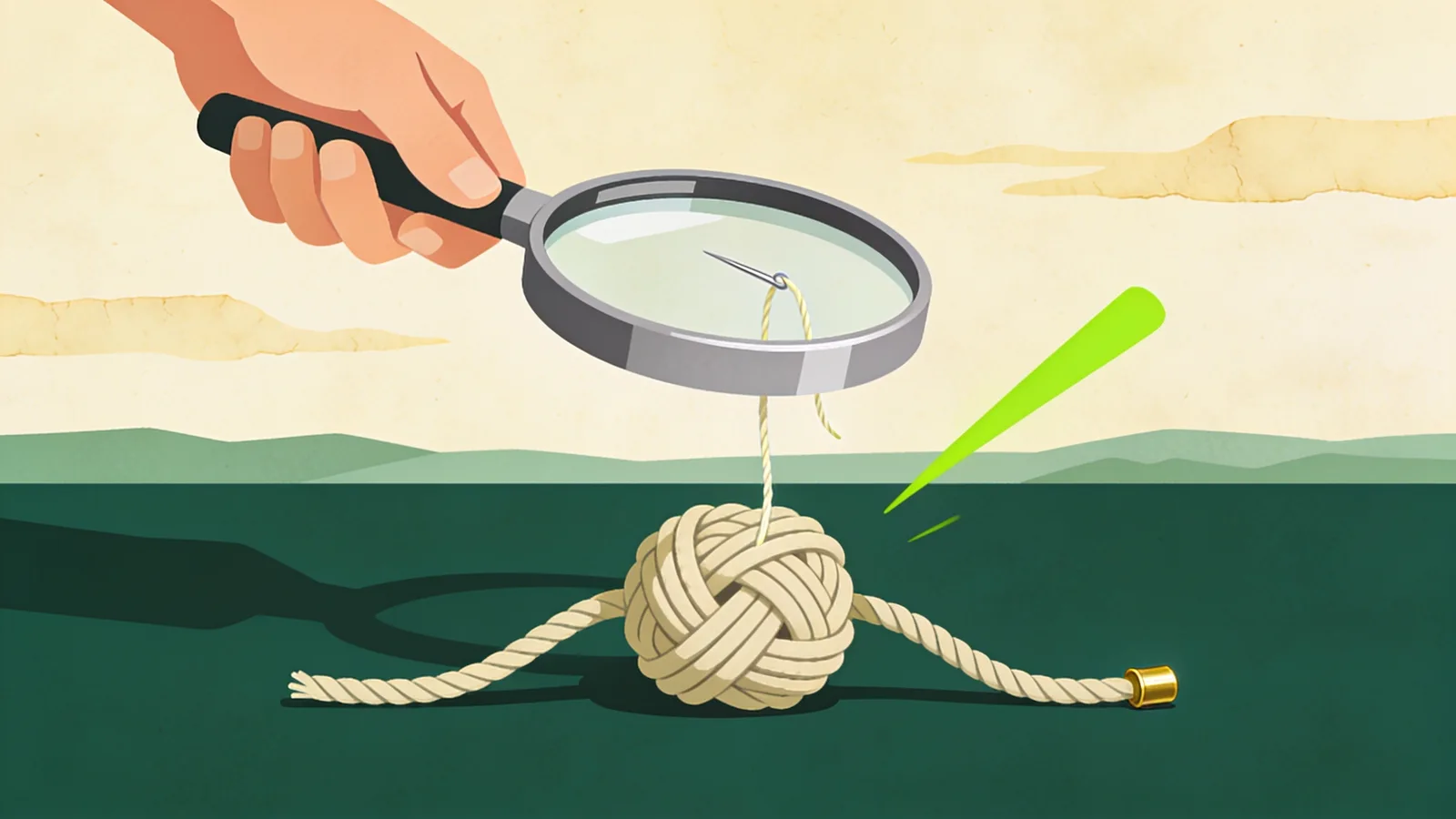
What does "problem solution fit" actually mean?
Problem solution fit is the point where you can show, with real evidence, that a specific group of people has a real problem and that your proposed solution genuinely addresses it. It comes before product market fit, before a prototype, and usually before any patent conversation. It is a belief you have earned through evidence, not a hunch you are hoping is true.
Most ideas fail not because the solution was badly built, but because nobody checked whether the problem was real, painful, and worth solving before the building started.
How do you know if you're solving a real problem?
Start by writing the problem down as a single sentence, without mentioning your solution at all. If you cannot describe the problem without describing your fix, you probably do not understand the problem yet.
Then ask three plain questions. Who feels this problem regularly. How are they dealing with it right now, even badly. And what would it be worth to them to make it go away. If you cannot answer all three with specifics, you are validating a guess, not a problem.
A problem worth solving usually has evidence already sitting in the world: people complaining in forums, workarounds people have jury rigged, money already being spent on inferior fixes. Existing behavior is the strongest signal, stronger than anything someone tells you in a conversation.
What's the difference between talking to people and validating a problem?
Conversations are useful, but they are also where most people fool themselves. People are polite. They say "that's a great idea" because it costs them nothing to say it.
Real validation looks for behavior, not opinion. Has the person tried to solve this themselves. Have they paid for a partial solution. Have they complained about it unprompted, before you brought it up. That kind of evidence is harder to get and much more honest.
How do you test whether your solution actually fits the problem?
Once the problem is confirmed, the solution side needs its own test. This is where a lot of ideas quietly fall apart, because the fix that feels obvious in your head does not match how people actually behave.
A workable approach:
- Describe the solution in one paragraph, in plain language, no jargon.
- Show that description to people who have the problem, not to friends or family.
- Ask what they would change, remove, or not use at all.
- Watch for hesitation, not just words. "I'd probably use this" is weaker than "I need this by next month."
If the reaction is lukewarm, that is data. It is tempting to explain the idea better instead of listening to the reaction. Resist that.
How many people do you need to talk to before you trust the signal?
There is no fixed number, but a pattern matters more than a headcount. If eight or ten people independently describe the same pain point in similar language, without you leading them there, that repetition is a stronger signal than a single glowing endorsement from someone who wants to be supportive.
What should you do before you spend money building anything?
Before money goes into a prototype, tooling, or a developer, three things are worth having in place.
First, a written problem statement that a stranger could read and understand in one sentence. Second, some evidence, even informal, that people are already trying to solve this problem on their own. Third, a rough sense of who would actually pay, and roughly what they would pay for a workable fix.
This is also a reasonable moment to check whether anyone else has already built something similar. A quick look at existing products, patents, and public write ups, sometimes called checking for prior art (meaning earlier public evidence of similar ideas), can save you from investing energy into something already solved elsewhere, and can also sharpen how you describe what makes your version different. Using AI for prior art search explains what that kind of early look can and cannot tell you at this stage.
What's a simple way to structure this validation process?
A workable structure for validating problem solution fit tends to follow a sequence rather than a checklist done all at once:
- Write the problem statement without naming your solution.
- Find where the problem already shows up in the world, complaints, workarounds, spending.
- Talk to real candidates and listen for repeated language, not polite agreement.
- Describe your solution simply and watch for hesitation or enthusiasm in their reaction.
- Estimate rough willingness to pay, even if it is a range rather than a number.
- Decide whether the evidence is strong enough to justify the next step, whether that is a prototype, a patent conversation, or a pivot.
This is close to what an automated startup validation workflow is designed to walk through, in a more structured and repeatable way than doing it alone on a notepad.
How is this different from a full feasibility study?
Problem solution fit is the earlier, cheaper question. A feasibility study usually comes after, and asks whether the solution can actually be built, at what cost, and with what technical or regulatory constraints. If problem solution fit is shaky, a feasibility study is premature. Startup idea feasibility study tool covers what that next step actually involves once the problem side is solid.
What are the most common mistakes people make here?
A few show up again and again.
Falling in love with the solution before confirming the problem. It feels productive to sketch, name, and describe a solution, so people rush there instead of sitting with an uncomfortable, unsolved problem.
Asking leading questions. "Wouldn't it be great if..." invites agreement rather than honest reaction.
Treating enthusiasm from friends and family as market signal. They are rooting for you, which is lovely, but it is not evidence.
Skipping the money question. A problem people feel is not the same as a problem people will pay to fix. Those are two separate things to verify.
Moving straight to building. Time spent validating is nearly always cheaper than time spent building the wrong thing and finding out later.
When is an idea ready to move past this stage?
An idea is ready to move forward when the evidence, not your excitement, says the problem is real, the audience is identifiable, and the proposed solution addresses something people are already trying and failing to fix on their own. At that point, questions about protecting the idea, whether it may qualify for patent protection, how to structure the business around it, or how to build a first version, become worth exploring. That protection question is a separate one from validation, and it is the kind of question a patent attorney would eventually help answer once there is something concrete to describe. IP commercialization strategy for inventors lays out what typically comes before that conversation.
If you want a structured way to pressure test where your own idea stands right now, EntreDash's free idea assessment walks through problem, evidence, and next steps in one pass, without requiring you to have a prototype or a patent attorney lined up first. And the IP Education Center has broader background if you want to understand how validation, prior art, and patent strategy fit together before you commit real money to any single path.