The Idea That Feels Obvious to You (and Only You)
You have an idea. It came from a lab bench, a group project, a bug in someone else's product, or a late-night tangent that would not leave you alone. It feels obvious. Surely someone would pay for this.
Here is the problem: your certainty is not evidence. Every inventor feels certain. The people who build real things learn to separate the feeling from the proof, and they learn to get that proof before they spend real money on tooling, code, or parts.
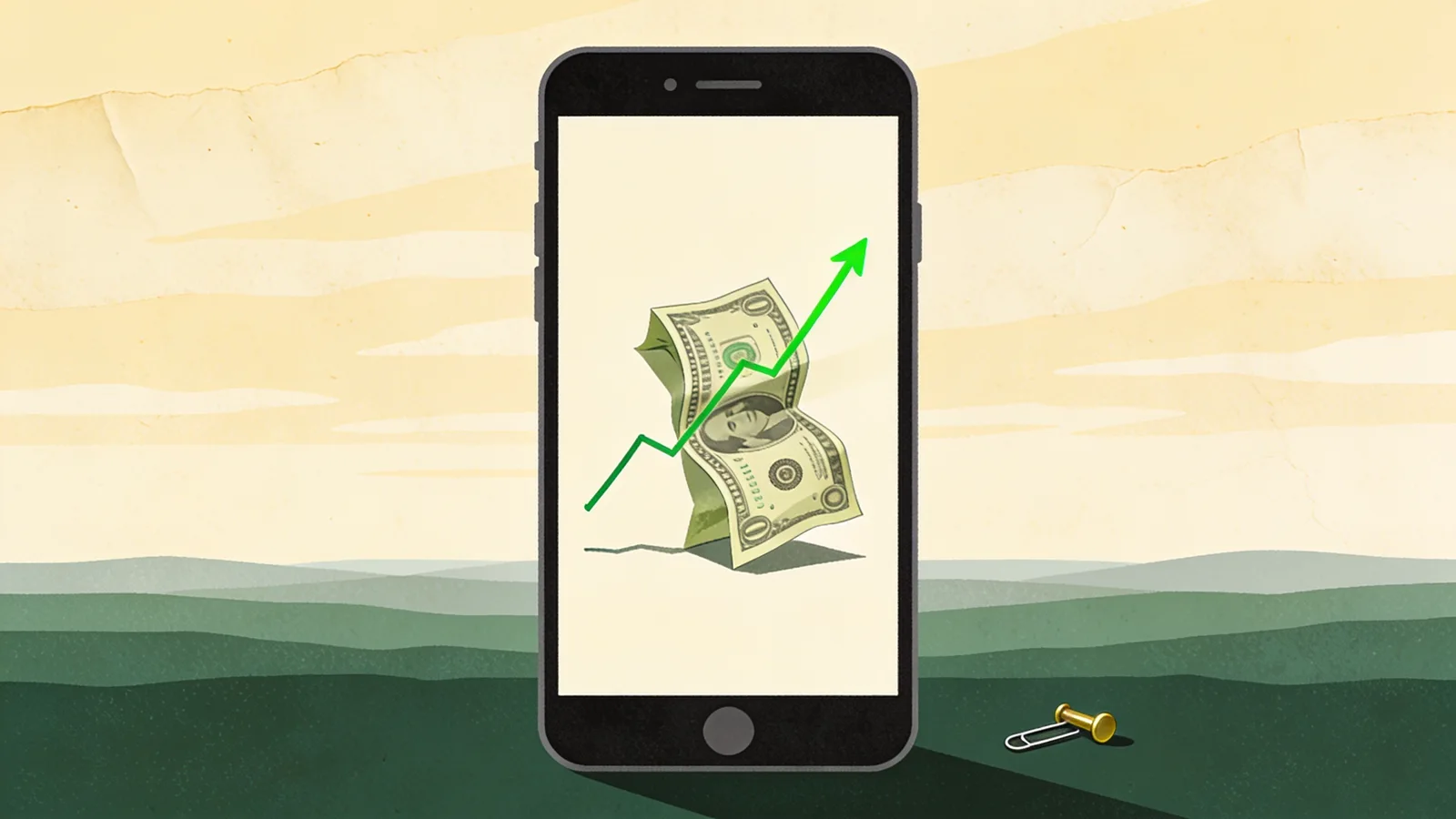
A $50 demand test on social media will not tell you if your idea is patentable. It will not replace a prior art search, the process of checking whether your idea, or something close to it, already exists in public. What it will do is give you a cheap, fast signal on a much more basic question: does anyone besides you care?
Why Test Demand Before You Build
Most STEM-trained builders default to prototyping first. It is the comfortable move. You know how to build things, you do not necessarily know how to sell things, so you go where you are strong.
That instinct costs people months and hundreds or thousands of dollars. A 3D-printed enclosure, a custom PCB, a working app all prove you can build something. They do not prove anyone wants it.
Demand testing flips the order. You spend a small, fixed amount of money and a few hours finding out if strangers will stop scrolling, click, comment, or hand over an email address for your idea. If they will not do that for a rough post, they are unlikely to pull out a credit card for the finished product.
This is not about being scrappy for its own sake. It is about sequencing risk. Spend the $50 to find out if the market risk is real before you take on the engineering risk.
What a Demand Test Actually Measures
A demand test does not measure whether your idea is good, novel, or defensible. It measures attention and intent. Specifically, you are looking for:
- Click-through rate: Did people who saw the post care enough to tap for more?
- Cost per result: How much did it cost to get one email, one comment, one click?
- Message resonance: Which version of the pitch got more response, the one about saving time or the one about saving money?
- Objections: What did people say in the comments that you had not considered?
That last one is often the most valuable output. Comments surface language, use cases, and doubts you would never think to test for on your own.
The $50 Framework
Here is one way to structure it, adjustable to your platform and budget.
Step 1: Write One Sentence That Sells the Problem, Not the Product
Before you describe your solution, describe the pain. "Tired of X" or "Wish there was a way to Y" tends to outperform technical descriptions of what you built or plan to build. People respond to relief, not specifications.
Step 2: Build a One-Page Landing Spot
This does not need to be fancy. A single page with the problem statement, one image or sketch of the concept, and a form asking for an email address works fine. Free page builders exist for exactly this. The goal is a place for interested people to land, not a finished product page.
Step 3: Run a Small Paid Post
Pick one platform where your likely audience already spends time. Set a budget of $30 to $40. Target as narrowly as the platform allows: interest categories, age range, and if relevant, professional or hobbyist groups close to your idea.
Run it for three to five days. Resist the urge to check every hour. Let the data accumulate.
Step 4: Run One Organic Post in a Relevant Community
Use the remaining $10 to $20 as a small boost on a post in a forum, subreddit, or group where your target user already asks questions related to the problem. Communities of builders, hobbyists, or students in adjacent fields are often more honest and more specific in their feedback than a general ad audience.
Step 5: Track Three Numbers
- Cost per click to your landing spot.
- Percentage of visitors who left an email or comment.
- Number of unprompted comments describing their own version of the problem.
If your cost per signup is reasonable for your market and people are describing their own pain in the comments without being asked, you have a real signal worth paying attention to.
What Counts as a Good Result
There is no universal number, but a few patterns are worth watching for:
- People asking "when can I buy this" before you have anything to sell.
- People tagging a friend who has the same problem.
- Comments that argue with each other about the best solution, meaning the problem is real enough to have opinions about.
- A signup rate that would make sense as a business, even a small one, if you scaled the spend.
A weak result also looks distinct: polite likes with no comments, no email signups despite decent traffic, or comments that misunderstand the problem entirely. That last one usually means your one sentence needs rework before you conclude anything about the idea itself.
What This Test Cannot Tell You
Be honest about the limits. A $50 social test cannot tell you:
- Whether your idea may qualify for patent protection. That depends on factors like novelty and non-obviousness, the kind of question a patent attorney would ask after reviewing what already exists in the field.
- Whether the market is large enough to build a company around, only whether a small slice of it responded to a post.
- Whether people will actually pay, since intent to click is not the same as intent to purchase.
- Whether a competitor already has a stronger version of this in the works.
Demand testing and prior art research answer different questions. One tells you if people want the problem solved. The other tells you what already exists in the world that solves it, or comes close. Skipping either one leaves a real gap in your understanding of the idea.
Sequencing: What to Do With the Result
If the demand test shows real signal, that is the moment to widen a prior art search, one that looks not just at existing patents but at products, papers, and forum posts already addressing the same problem. Strong demand with strong prior art still might mean there is room for a better, cheaper, or more elegant version. Strong demand with weak prior art is the combination most builders hope for.
If the demand test shows weak signal, you have saved yourself the cost of tooling, prototyping, and months of work on a problem few people feel urgently. That is not a failure. That is $50 well spent.
Either way, you now have something more useful than conviction: data, however small, that came from people who are not you.
The Real Value of Doing This Early
Engineers and scientists are trained to trust rigor. A demand test is just rigor applied to a different variable, market interest instead of technical feasibility. It costs less than a single component order and takes less time than a single lab session.
The idea that survives a $50 test, and later a real look at what else exists in the field, is the idea worth the next round of time and money. The one that does not survive taught you something for less than the price of a textbook.