How to Turn a Daily Frustration Into a Business Idea
The fastest way to turn a daily frustration into a business idea is to treat the annoyance as data, not noise. Write down the exact moment it happens, who else feels it, and what you currently do to work around it. That workaround is usually the seed of the product, because it shows you what people actually need, not just what they say they want.
Most people feel a small irritation, sigh, and move on. That is the correct human response and the wrong entrepreneurial one. The habit that separates people who build things from people who just complain is noticing the friction and staying with it for one more minute.
Why Frustration Is a Better Starting Point Than Inspiration
A lot of advice tells you to "find your passion" or wait for a flash of inspiration. That advice is not very useful if you are busy with labs, problem sets, or a part-time job. Frustration is more reliable than inspiration because it is specific, recurring, and already tied to a real moment in your day.
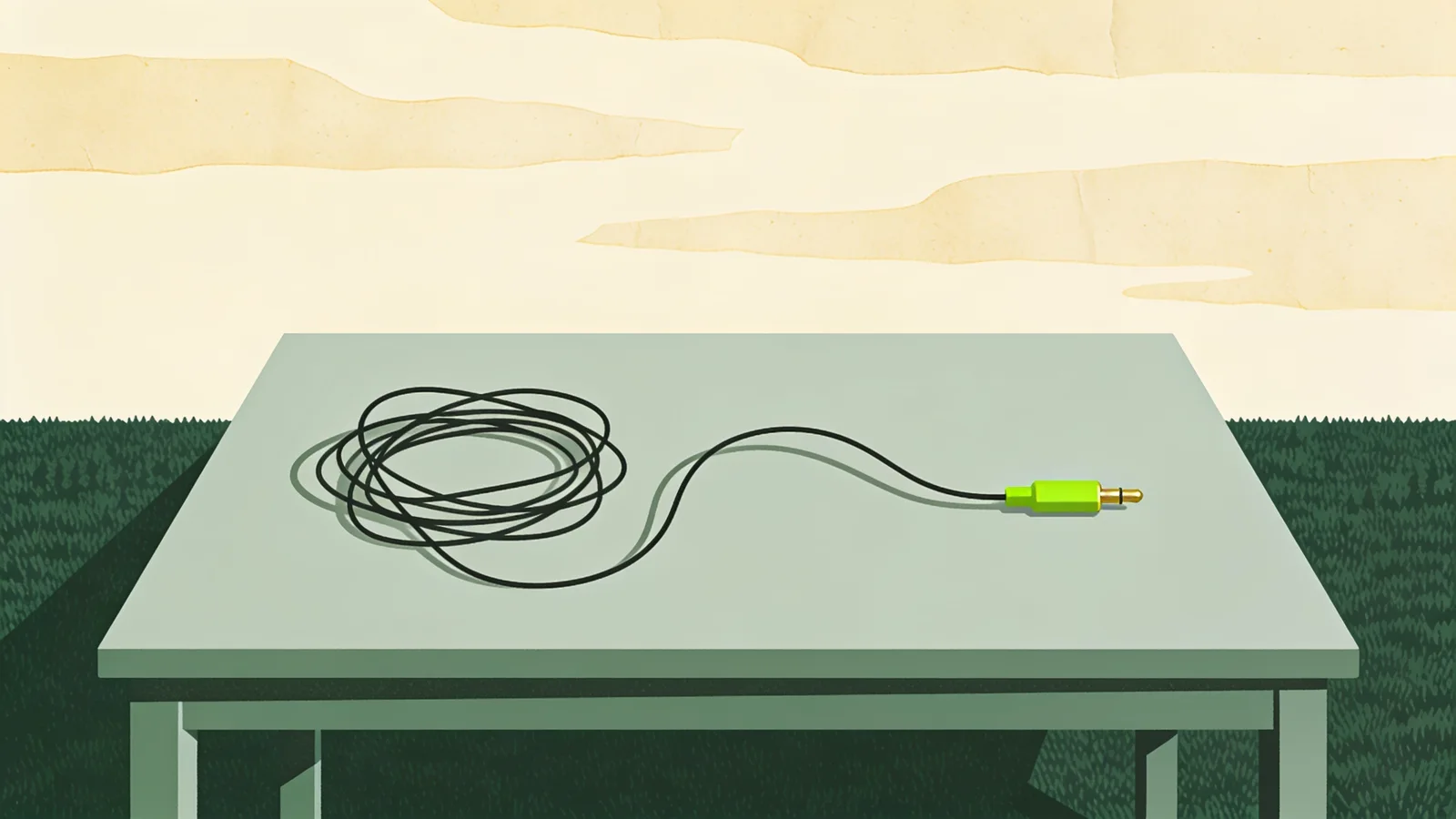
If a cable always tangles in your backpack, if your lab notebook never survives a spill, if the same campus printer jams every week, you have already done the hardest part of market research without trying: you have found a real user (you) with a real, repeated problem. That is more than most business ideas start with.
The engineering habit of noticing where a system breaks down translates directly here. An idea does not need to be dramatic to be worth examining. It needs to be recurring and specific.
Step 1: Log the Friction, Don't Just Remember It
Memory is unreliable and it flatters you. A week from now you will remember the feeling of being annoyed but forget the exact conditions that caused it. Keep a running note on your phone. Every time something in your day is harder than it should be, write down:
- What you were doing
- What went wrong
- What you did instead (the workaround)
- How often this happens
After two or three weeks, patterns show up. One frustration you logged twice might turn out to be minor. Another one you logged eight times is telling you something. Frequency is one of the simplest signals of a real problem, and it costs nothing to track.
Step 2: Separate the Complaint From the Constraint
A complaint is "this is annoying." A constraint is the actual reason the current solution fails. If your dorm room extension cord always ends up in a knot, the complaint is the tangling. The constraint might be that cord length is fixed, storage space is small, and nobody wants to spend five minutes coiling something every day.
Design work almost always starts by finding the constraint, not the complaint. Once you can state the constraint in one sentence, you are close to a concept. If you're not sure how to move from that one sentence to a working shape, Spark is built for exactly that gap: it takes an everyday frustration and turns it into a few concrete directions worth exploring, before you invest real time or money.
Step 3: Check If the Frustration Is Actually Shared
This is where a lot of ideas quietly die, and that is a good thing when it happens early. You might be the only person in the world who cares that your headphone cord catches on your jacket zipper in a very specific way. Or you might be one of thousands.
Ask five to ten people outside your immediate friend group a simple question: "Does this ever happen to you?" Do not describe your solution yet. Just confirm the problem exists for other people, in their own words. If people start describing the same workaround you invented independently, that is a strong signal. If they shrug, that is useful information too. It is much cheaper to learn this now than after you have paid for a mold or a prototype run.
For a structured way to test this without spending real money, testing demand before you build anything walks through how to validate interest using nothing more than a simple post or a landing page.
Step 4: Sketch the Workaround, Not the Product
Here is a habit worth building early: don't sketch the finished product first. Sketch your current workaround. The rubber band you use to hold something in place, the app you screenshot into three times a week, the note you keep taping back up. Workarounds are honest. They show you the actual shape of the problem, stripped of any assumptions about what the "real" solution should look like.
Once you understand the workaround, you can start asking what a purpose-built version would need to do differently. This is also the stage where it helps to think in terms of components rather than a finished object. Breaking an invention into components and materials is a practical next step once you have a rough concept, because it forces you to think about what the thing is actually made of, not just what it looks like in your head.
Step 5: Ask Whether the Idea Has Any Edge Worth Protecting
Not every frustration-turned-idea needs a patent, and it's worth saying plainly: most early ideas don't. But it is worth understanding, early, what kind of protection might eventually matter for your specific concept. A clever mechanism might be the kind of question a patent attorney would ask about. A distinctive shape might matter more as a design question. A clever process you run behind the scenes might be better kept as a trade secret than disclosed in a patent filing at all.
You do not need to answer this in week one. But understanding the landscape early saves you from wasted effort later. Which Type of IP Protection Actually Fits Your Idea is a good primer for getting oriented before you assume you need a patent at all.
Why This Matters More For People With Technical Training
If you're used to solving problems with equations, code, or lab procedures, you already have an advantage most first-time founders don't: you're comfortable breaking a messy situation into testable pieces. That is exactly the skill that turns a vague annoyance into something buildable. The gap is usually not technical ability. It's simply never having been shown that the process starts with noticing, not with building.
A daily frustration is not yet an invention. It is a starting point, a piece of prior art in your own life (prior art meaning any evidence that something like this already exists or has been tried, which is one of the first things worth checking once an idea starts to take shape). The frustration tells you where to look. Everything after that, the workaround, the shared pain point, the rough sketch, is the actual work of turning it into something real.
From Noticing to Building
Once you have a frustration logged, a constraint named, and some evidence that other people feel it too, you are past the hardest and least structured part of the process. From there, the path gets more concrete: sketching parts, checking prior art, thinking about pricing and protection. From Idea to Invention: The Real Steps Before You Build Anything lays out what that path actually looks like once you have something worth pursuing.
If you already have a specific idea sitting in your notes app and you want a clearer sense of where it stands, the free idea assessment is a reasonable next step. And if you have the frustration but not yet the idea, that's a different starting point, and one Spark is built specifically to help with.
The habit worth keeping, regardless of where you are in the process: the next time something in your day is more annoying than it should be, don't just sigh and move on. Write it down. That small note might be the most valuable thing you write all week.