Every idea is a stack of bets
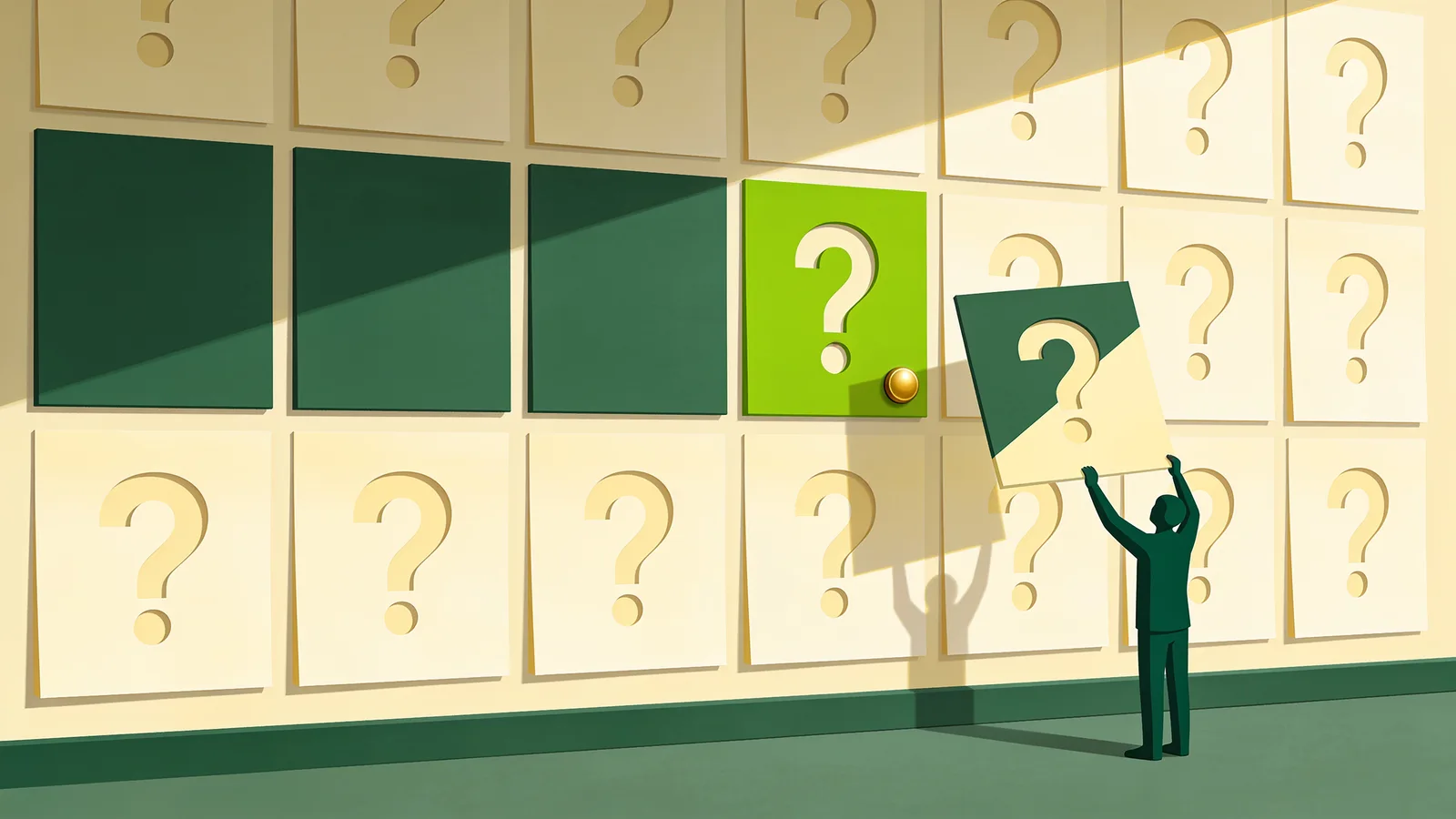
Underneath any invention is a stack of quiet assumptions. That a particular group of people has this problem. That they would change what they do to solve it. That they would pay. That the way you solve it is the way they want it solved. You believe all of these, or you would not be excited. Customer discovery is the practice of dragging those beliefs into the light and testing them one at a time.
The reason it matters is simple: the most expensive assumptions are the ones you never noticed you were making. They do not announce themselves. They sit underneath the plan, load-bearing and invisible, until the thing you built leans on them and they give way.
Write the assumptions down
Before you can test anything, you have to name it. Take your idea and write out the sentence "This works only if..." as many times as you can. Each ending is an assumption.
- This works only if busy parents actually forget this, rather than just occasionally.
- This works only if they would trust a device to handle it.
- This works only if they would pay more than a few dollars for it.
- This works only if the hard part is the part I think is hard.
Now you have a list. Some of these you already half-know. Some of them, once written, look shakier than they felt. Rank them: which assumptions, if wrong, would sink the whole idea? Those are the ones to test first. Do not start with the comfortable ones.
Turn each assumption into a question
An assumption is a statement. A discovery question is how you test it in a real conversation without tipping your hand. The trick is to ask about behavior and history, not opinions about your idea.
Take the assumption "busy parents would trust a device to handle this." A weak question is "would you trust a device to do this?" It invites a hypothetical yes. A strong question points at the past:
- "How do you handle this today?"
- "Have you ever used something automated for a task like this? What happened?"
- "When you have tried tools like that, what made you keep them or drop them?"
You are not asking whether they would trust your thing. You are learning whether they have ever trusted anything like it, which is far better evidence.
A pattern that works
For each assumption, write one question that asks about a real past event, one that asks about the current workaround, and one that asks about what a failure cost them. Three questions per assumption, all pointed backward at things that actually happened. That is an interview guide, and it is built directly from the bets your idea depends on.
Listen for disconfirmation
Here is the hard part. The goal of customer discovery is not to hear that you are right. It is to find out where you are wrong while it is still cheap to be wrong. Go into each conversation actively hoping to disprove your riskiest assumption. If you cannot manage to disprove it after several honest attempts, that is real evidence it might hold.
Watch for the moment you start explaining your idea to defend it. That is the moment discovery stops and pitching begins, and pitching teaches you nothing. When you feel the urge to convince, ask another question about the past instead.
From questions to a decision
After a round of conversations, sort what you heard against your ranked list. Which assumptions held up? Which cracked? A cracked load-bearing assumption is not a failure. It is the whole point. It might mean the problem is real but your solution is aimed slightly wrong, which is a pivot you can make now for the price of a few conversations instead of later for the price of a built product.
Customer discovery turns a leap of faith into a series of small, survivable tests. You still need conviction to invent. But conviction tested against real people, one assumption at a time, is a far sturdier thing to build a business on than conviction alone.