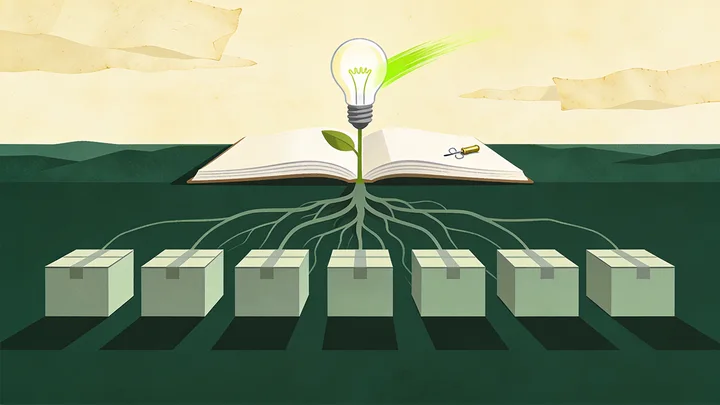
What is systematic product validation for inventors?
Systematic product validation is the practice of testing an invention idea in a fixed sequence, before spending money on prototypes or tooling. The order usually runs: clarify the problem, check if people actually want it, scan for prior art (existing patents or public disclosures that cover similar ground), size the market, and only then estimate what it costs to build. Skipping steps, or doing them out of order, is the single most common reason inventors spend money on something that was never going to work.
Most people do validation backward. They build first, then ask whether anyone wants it, then wonder if it is even new. Flipping that order does not guarantee success, but it means every dollar spent after validation is spent with more information than before.
Why do so many inventors skip validation entirely?
Ideas feel urgent. Once someone has a concept they believe in, the instinct is to move toward a prototype, a sketch, or a 3D model as fast as possible. That instinct is not wrong, it is just early.
The problem is sequencing. A 2023 analysis of inventor spending patterns commonly cited in product development circles found that inventors who build a working prototype before any market or prior-art check tend to spend three to five times more before finding out their idea needs a major pivot, compared with those who validate first. The money is not wasted because the idea was bad. It is wasted because the order was wrong.
There is also a legal reason not to rush. Talking to manufacturers, investors, or even friends before any protective step can affect what options stay open later, which is one reason the question of whether you need an NDA before sharing your invention comes up so early in most founders' timelines.
What does a systematic validation sequence actually look like?
A workable sequence has five stages, and each one answers a different question:
- Problem clarity: is this solving something real, for a specific person, in a specific moment?
- Early market signal: will anyone pay for a solution, even a rough one?
- Prior art screening: has something similar already been disclosed publicly or patented?
- Business case: does the math work once you account for cost to make, cost to sell, and realistic price?
- Financial projection: what does the first one to three years actually look like in numbers?
This is close to the structure used in the step-by-step guide to developing an invention idea, which walks from early concept through to an attorney-ready package. The order matters because each stage is cheaper to redo than the one after it. Finding out your market is too small costs you a few conversations. Finding out your market is too small after tooling a mold costs thousands.
How is validating a product idea different from validating a patentable idea?
These are two different questions, and conflating them is a common mistake.
Market validation asks: will people buy this? Patentability is a separate, legal question that only a patent attorney or patent agent can properly assess, and it depends on factors like novelty and non-obviousness relative to existing disclosures. An idea can be commercially strong and still face prior art that limits what, if anything, can be protected. It can also be legally novel and have no real market.
A prior art search is a factor worth examining early precisely because it is the kind of question a patent attorney would ask before taking a case further. It is not a verdict on whether something is patentable, but it tells you whether you are standing on open ground or crowded ground. EntreDash's methodology page outlines which databases get searched during this kind of screening and how findings are cited, which is useful context before assuming a search is exhaustive.
What should come before you ever build a prototype?
Before any physical build, three things should exist in some form:
- A written, specific statement of the problem and who has it
- Some evidence, even informal, that the target person would pay to solve it
- A basic prior art check, even a rough one, so you are not building toward a wall
The invention idea evaluation checklist is a useful gut check at this stage, because it forces specificity: who is the buyer, what do they currently do instead, what would make them switch.
Only after those three exist does a concept drawing or 3D model earn its cost. A numbered concept sketch or a 3D concept model communicates an idea to manufacturers, collaborators, or early testers, but it is a communication tool, not a validation step. Building one too early just makes a wrong idea look more finished.
How long should validation take, and what does it cost?
There is no fixed number, because it depends on the idea's complexity and how much the inventor already knows about their market. How long it takes to develop an invention walks through realistic ranges by stage, but validation itself, done with focus, often takes two to six weeks of concentrated work: customer conversations, a prior art scan, and a basic business case.
Cost varies more than time does. The item-by-item breakdown of what it costs to take an invention to attorney-ready compares hiring everything out, doing it yourself with software, and using a structured workspace, and the gap between those paths is often in the thousands of dollars. If you want a number specific to your own idea, the free invention development cost calculator estimates cost and time three different ways based on what you input.
What mistakes make validation worthless even when people do it?
The most expensive mistake is not skipping validation, it is doing it with biased inputs. Asking only friends and family produces false confidence, because people who like you tend to say they would buy something they never actually would. What invention development mistakes cost inventors the most money documents this pattern in detail, and it is worth reading before trusting any early positive feedback.
A second mistake is treating a single prior art search as final. Patent and public disclosure landscapes shift, and a search done once at the idea stage does not stay accurate forever, especially for ideas that take months to develop. Affordable ways to run an international prior art search is a reasonable next read if the idea has any export or multi-market ambition.
A third mistake is skipping the financial model because the idea feels obviously good. Obvious is not the same as viable. A basic projection, even rough, often surfaces a cost structure problem before a single unit is built.
What does a validated idea actually look like at the end of this process?
A validated idea, in practical terms, has four things attached to it: a clear problem statement backed by real conversations, a prior art screening that identifies what already exists in the space, a basic business case showing the unit economics could work, and a rough financial projection for the first stretch of operation. None of these are guarantees. Together, they are the difference between a hunch and a case someone else, an accelerator, an investor, a manufacturer, can actually evaluate.
That is the practical reason this sequence exists. It is not about proving an idea is good. It is about knowing, before you spend real money, which of the five stages is the one that will actually make or break it. For a first pass at where an idea stands against this sequence, EntreDash's free advisory board runs an idea through product, IP, and financial review in one pass, and how the process works end to end lays out what each stage covers.