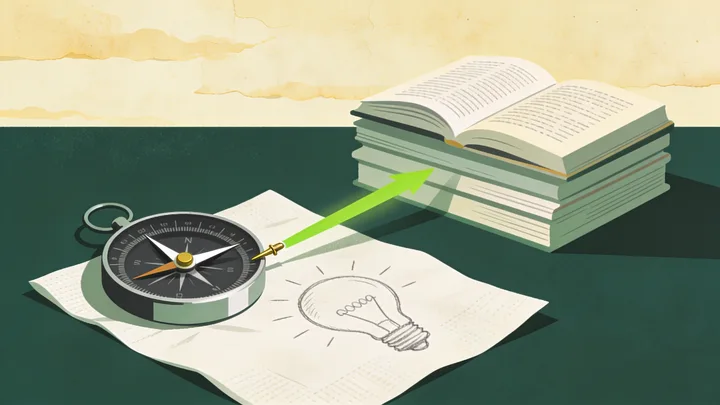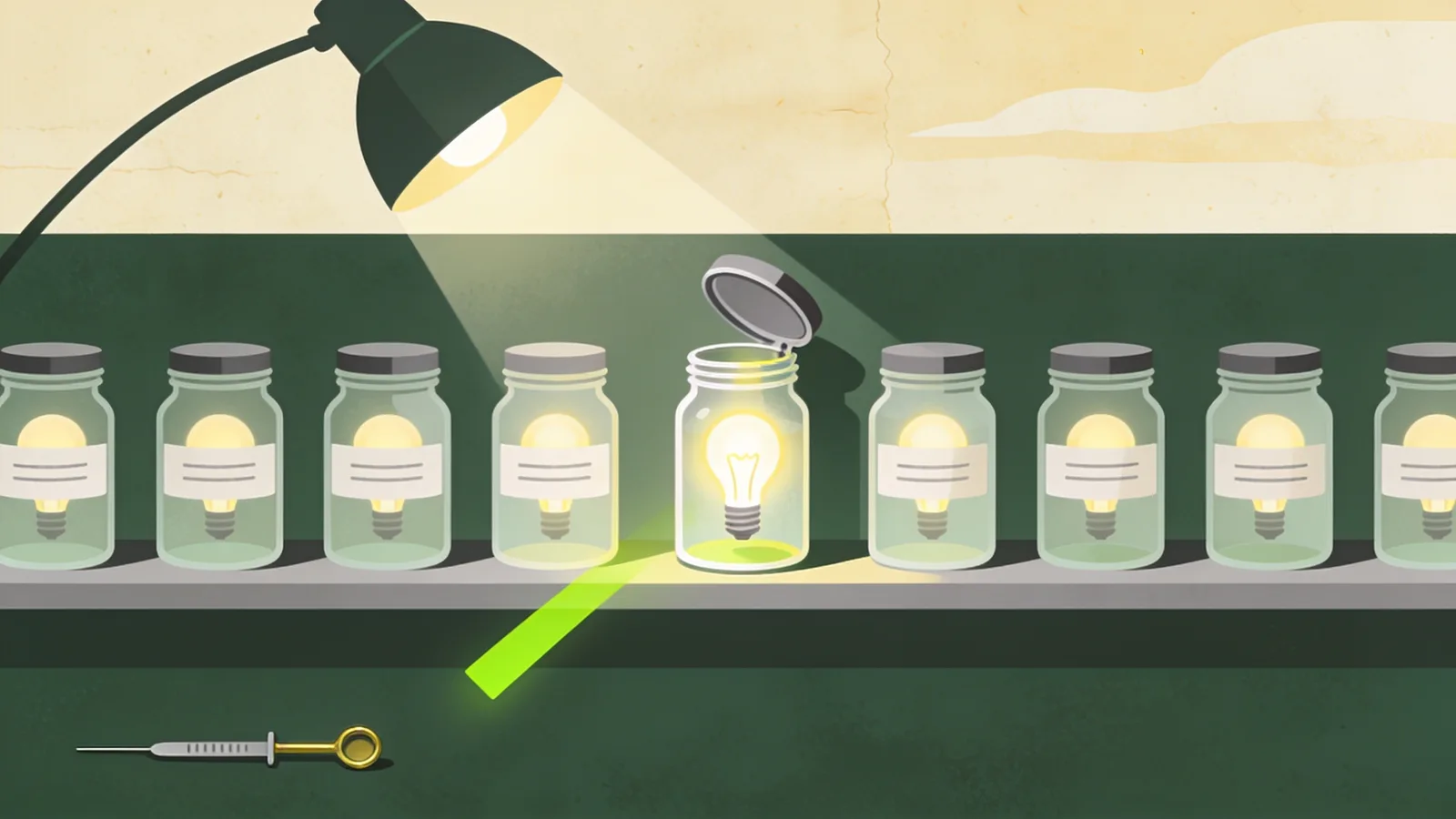
What Is a Personal Innovation Management System?
A personal innovation management system is a consistent way of capturing ideas, testing them, and deciding which ones deserve real time and money. It is not a piece of software. It is a process: how you log an idea the moment it hits, how you check whether it already exists, how you decide it is worth a next step, and how you protect it along the way. Most people who generate a lot of ideas do not have one. That is usually the whole problem.
If you have ever had a good idea, done nothing with it for six months, and then seen someone else launch a version of it, you already understand why this matters. The idea was not the failure. The absence of a system was.
Why Ideas Die Without a System
Ideas do not usually die because they were bad. They die from neglect, indecision, or simply getting buried under the next idea and the one after that.
Here is the pattern most professionals fall into:
- An idea shows up, often outside of work hours.
- It gets a note in an app, a voice memo, or a scrap of paper.
- Life continues. The idea sits.
- Weeks later, the person can't remember why they were excited about it, or whether someone else already built it.
- A new idea arrives and repeats the cycle.
None of those five steps involve any actual evaluation. That is the gap a personal innovation management system closes. It gives every idea a fair, fast, repeatable path from "interesting thought" to "informed decision," instead of letting momentum or mood decide.
If you tend to juggle several ideas at once and lose track of which ones matter, it helps to read how to manage multiple startup ideas without losing momentum on any of them. The core discipline there and here is the same: fewer ideas moving forward, but each one moving on purpose.
The Four Parts of a Working System
A personal innovation management system does not need to be elaborate. It needs four working parts.
1. Capture
Every idea gets recorded the same way, in the same place, with the same minimum detail: what the idea is, what problem it solves, and who has the problem. A single sentence is fine. The point is consistency, not depth.
2. Triage
Not every idea deserves the same attention. A basic triage question works well: does this solve a real, recurring problem for a specific group of people, or does it just sound clever? Ideas that pass get a next look. The rest stay logged, not deleted. Ideas you shelve today sometimes become relevant later.
3. Evaluation
This is where most personal systems fall apart, because real evaluation takes two kinds of homework most people skip: checking whether the idea already exists, and checking whether it could work financially.
On the first point, that means a prior art search, a structured look through patents, published applications, and existing products to see what is already out there. This is not about proving an idea is patentable (that is a determination for a patent attorney to make). It is about seeing the landscape clearly before you invest more time. This is one factor that tends to matter a great deal at this stage, and it is exactly the kind of question a patent attorney would eventually ask you about anyway. You can see how that landscape work gets done, and which databases get searched, in the EntreDash methodology.
On the financial side, a rough viability pass tells you whether the idea can plausibly become a business before you sink real money into it. The startup idea financial viability assessment walks through how to do that without spending a dime.
4. Decision and Protection
Once an idea has been triaged and evaluated, it gets a verdict: pursue, shelve, or drop. Ideas that move forward need a protection plan appropriate to what they are. That might mean a provisional patent application, a trademark on the name, or simply keeping the details as a trade secret while you build. The right choice depends on the idea itself, which is why which type of IP protection actually fits your idea is worth reading before you assume a patent is the only option.
Why This Matters More for Professionals Than Hobbyists
If ideas are a side interest, an informal system is fine. But if you generate ideas regularly, whether from your industry, your customers, or your own frustrations, an inconsistent process becomes an expensive one. You end up doing real diligence only on the ideas that feel exciting in the moment, which is a terrible filter. Excitement and merit are not the same thing.
A system also protects you from a subtler risk: momentum bias. Once you have told a few people about an idea, or spent a weekend building a rough version, it gets emotionally harder to walk away, even when the evidence says you should. A structured evaluation step, done early and the same way every time, keeps that decision honest.
This is closely tied to how you think about yourself as a builder of ideas, not just an occasional idea-haver. What is a founder mindset and how do you actually build one covers the identity side of this. A personal innovation management system is the practical structure that mindset needs to actually function day to day.
Building the System Without Overbuilding It
The temptation is to design an elaborate system with spreadsheets, scoring rubrics, and color-coded stages. Resist that. The best personal innovation management system is the one you will actually use at 11pm when an idea shows up uninvited.
A workable version looks like this:
- One place to capture every idea, no exceptions.
- A standing rule for triage (one clear question, applied consistently).
- A default first evaluation step, run the same way every time, so you are not reinventing the process for each idea.
- A short list of protection options you understand well enough to choose from quickly.
If you are building this from scratch and want a structured starting point rather than assembling one piece by piece, a lean innovation process for solo founders working alone lays out a version built for exactly this situation: one person, limited time, no team to delegate the diligence to.
Where the Evaluation Step Usually Breaks Down
Most people can capture and triage ideas fine on their own. The evaluation step is where a personal system usually needs outside structure, because a proper prior art search and an honest read on commercial direction both take specific knowledge most professionals have not built.
This is the part of the process EntreDash exists for. It is not a replacement for a patent attorney and it is not legal advice. It is the work that happens before that conversation: taking a raw idea, searching the relevant patent and product landscape, and giving you a clear, documented starting point so that if you do move forward, you walk into that first legal conversation prepared instead of guessing.
If you already have an idea sitting in your notes app that has not moved in months, the fastest way to see what an evaluation step actually looks like is to start a free strategy session and run it through the process. You will get a clear picture of the prior art landscape and a straight answer on where the idea stands, without committing to anything.
And if the honest truth is you do not have an idea yet, just a recurring frustration you keep mentioning to friends, Spark is built for that exact starting point: turning a daily annoyance into a concrete set of business directions worth evaluating.
The Real Payoff
A personal innovation management system will not make every idea good. Most ideas, evaluated honestly, will not clear the bar, and that is the system working correctly, not failing. What it does is make sure the ideas that do clear the bar do not die from neglect, and the ones that don't get released quickly instead of quietly eating your attention for a year.
That is the whole value of a system: not more ideas, better decisions about the ones you already have. To see the full path from a captured idea to a documented, defensible starting point, how EntreDash works walks through each step end to end.